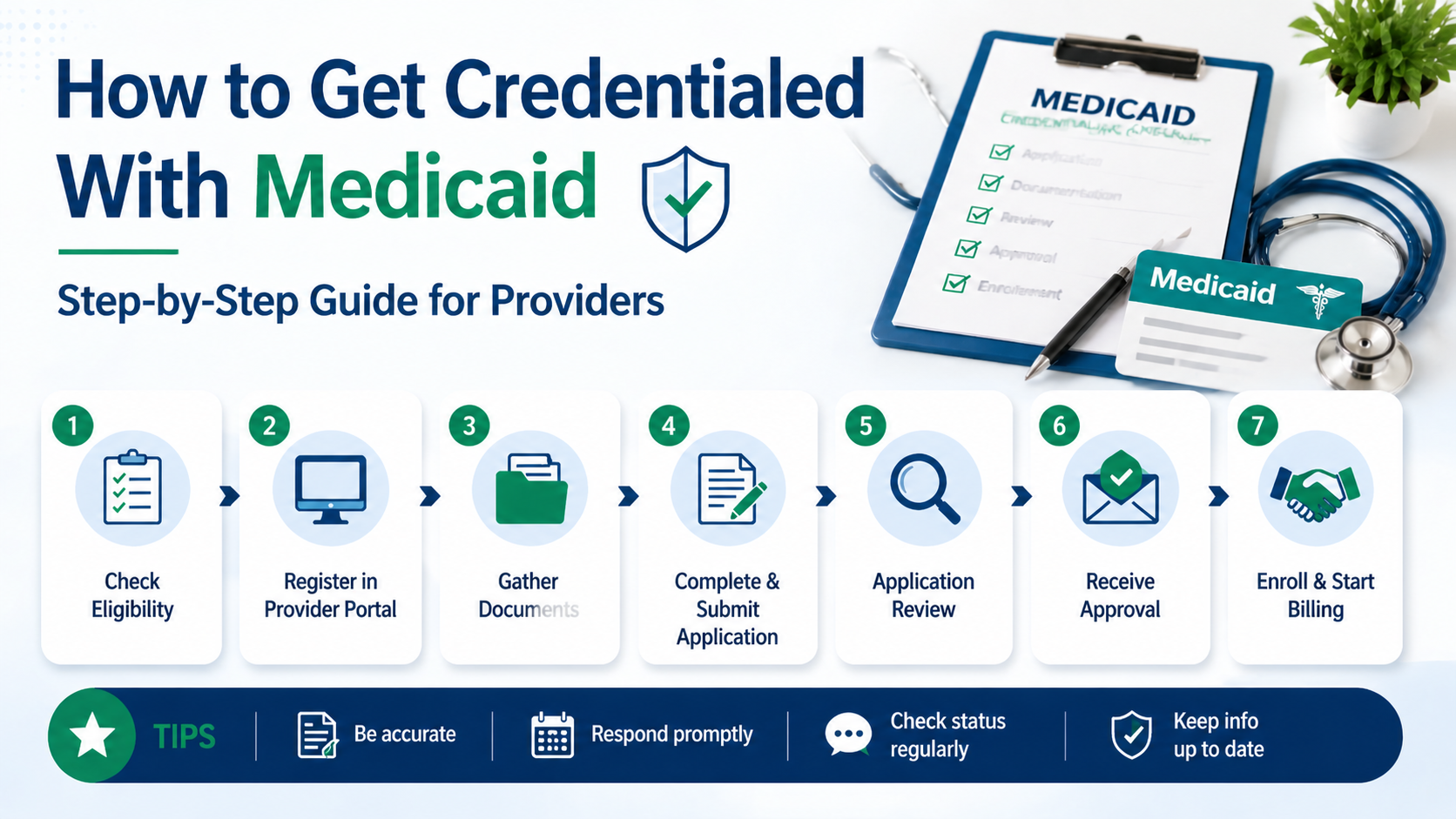
How to Get Credentialed With Medicaid (Step-by-Step Guide for Providers)
Getting credentialed with Medicaid means completing a formal enrollment process that allows healthcare providers to bill Medicaid and receive reimbursement. This process includes submitting an application, verifying credentials, and passing screening checks.
Medicaid credentialing is essential if you want to treat Medicaid patients and get paid for your services. Each state manages its own Medicaid program, but all follow federal guidelines set by the Centers for Medicare & Medicaid Services (CMS).
What is Medicaid credentialing, and why is it required?
Medicaid credentialing is the process of verifying a healthcare provider’s qualifications before granting billing privileges. It ensures that only licensed and qualified providers can treat Medicaid patients.
This process protects patients and prevents fraud. It also ensures compliance with federal and state healthcare regulations.
Key purposes:
- Verify provider identity and credentials
- Confirm licenses and certifications
- Assess risk level (fraud, abuse, compliance)
- Approve providers for Medicaid reimbursement

Who is eligible to enroll as a Medicaid provider?
Healthcare professionals and organizations that meet state requirements can enroll as Medicaid providers.
Eligibility depends on your state Medicaid program, but generally includes:
Eligible providers:
- Physicians (MD, DO)
- Dentists
- Therapists (PT, OT, speech, behavioral health)
- Clinics and group practices
- Hospitals and healthcare facilities
- Behavioral health providers
- Home health agencies
Basic requirements:
- Active state medical license
- Valid National Provider Identifier (NPI)
- Compliance with Medicaid rules
- No exclusions from federal healthcare programs
What documents are required for Medicaid credentialing?
You must submit detailed documentation to verify your qualifications and identity.
Common required documents:
- NPI confirmation
- State license(s)
- DEA certificate (if applicable)
- Malpractice insurance
- Resume or work history
- Tax ID (EIN or SSN)
- W-9 form
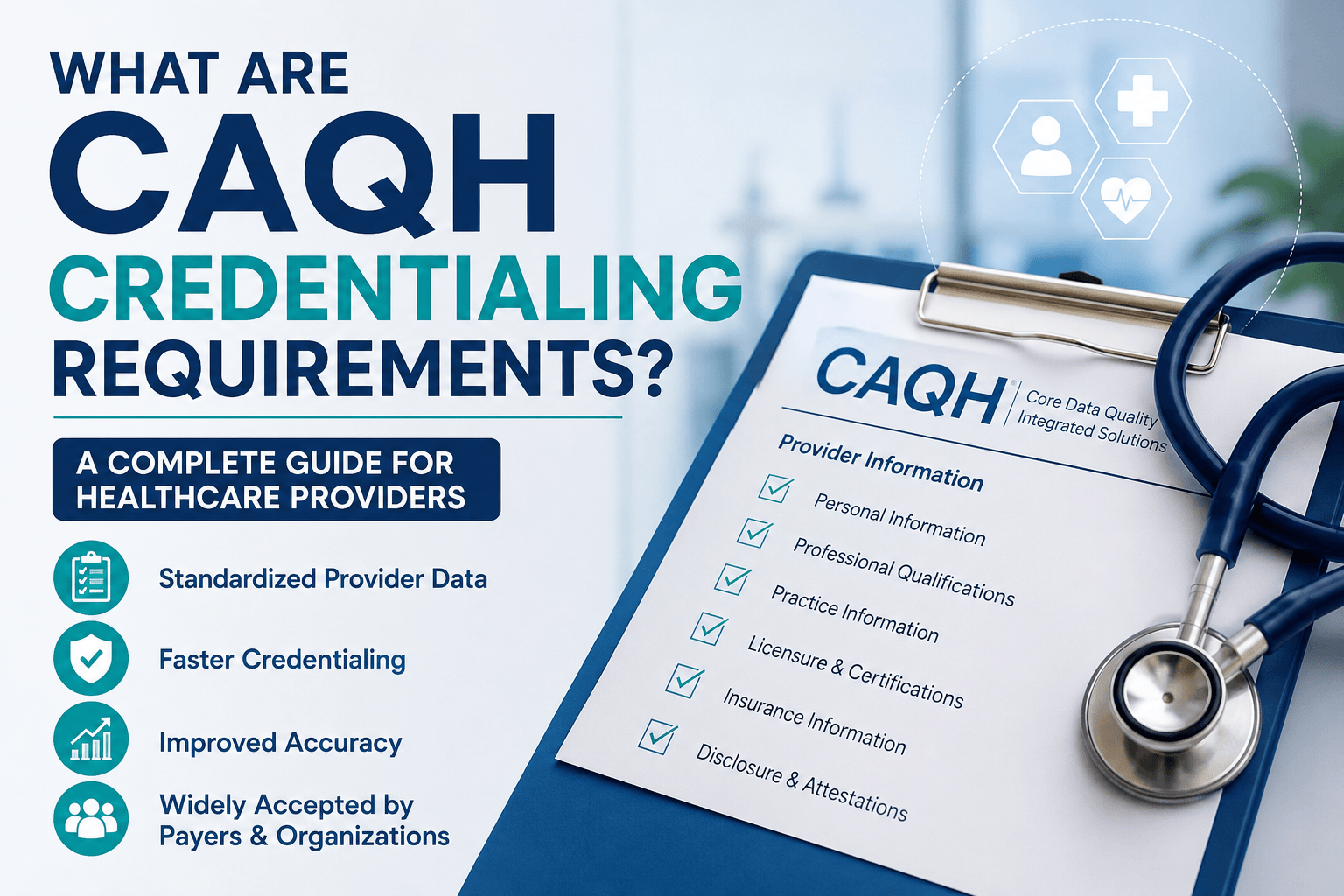
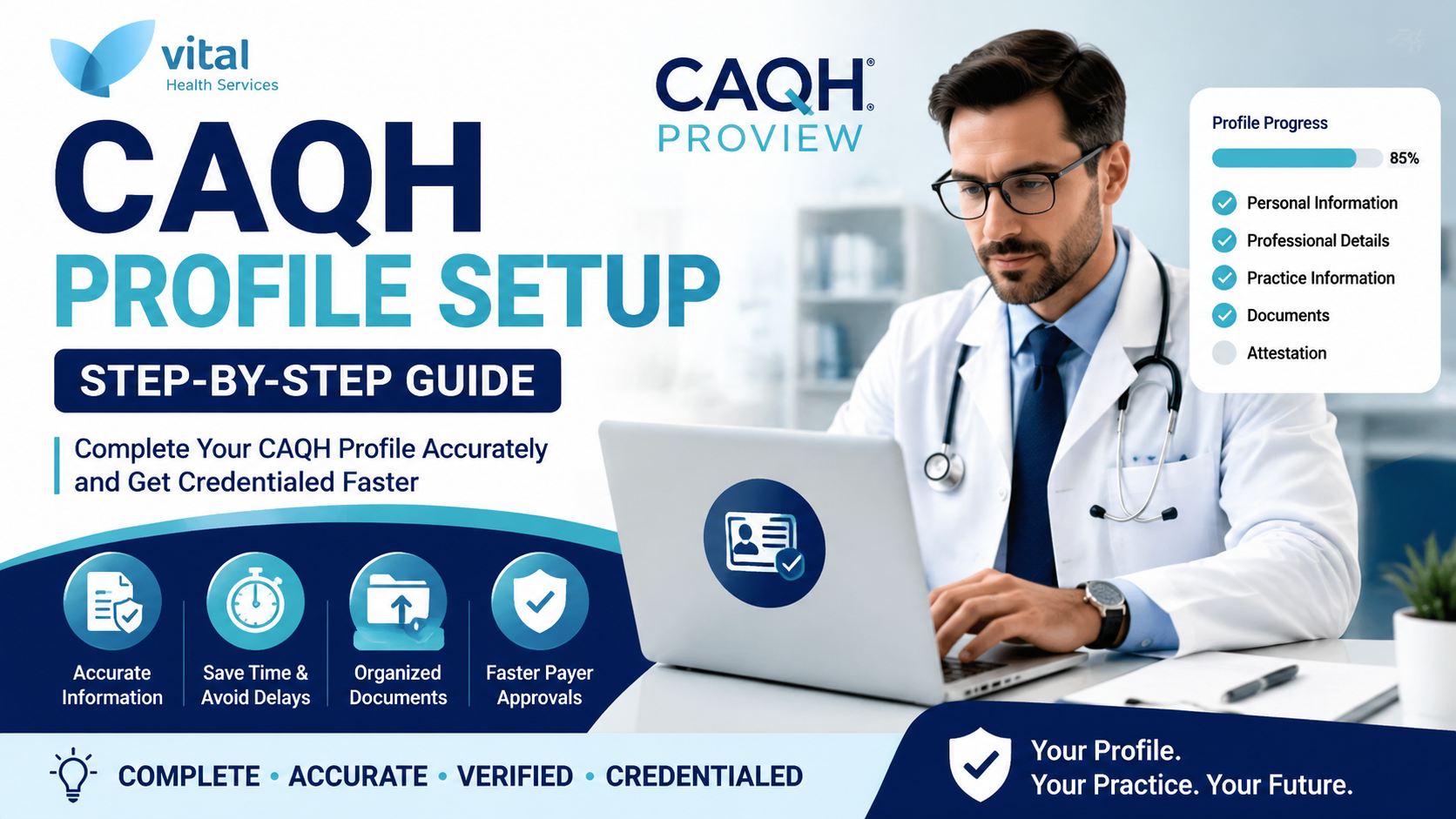
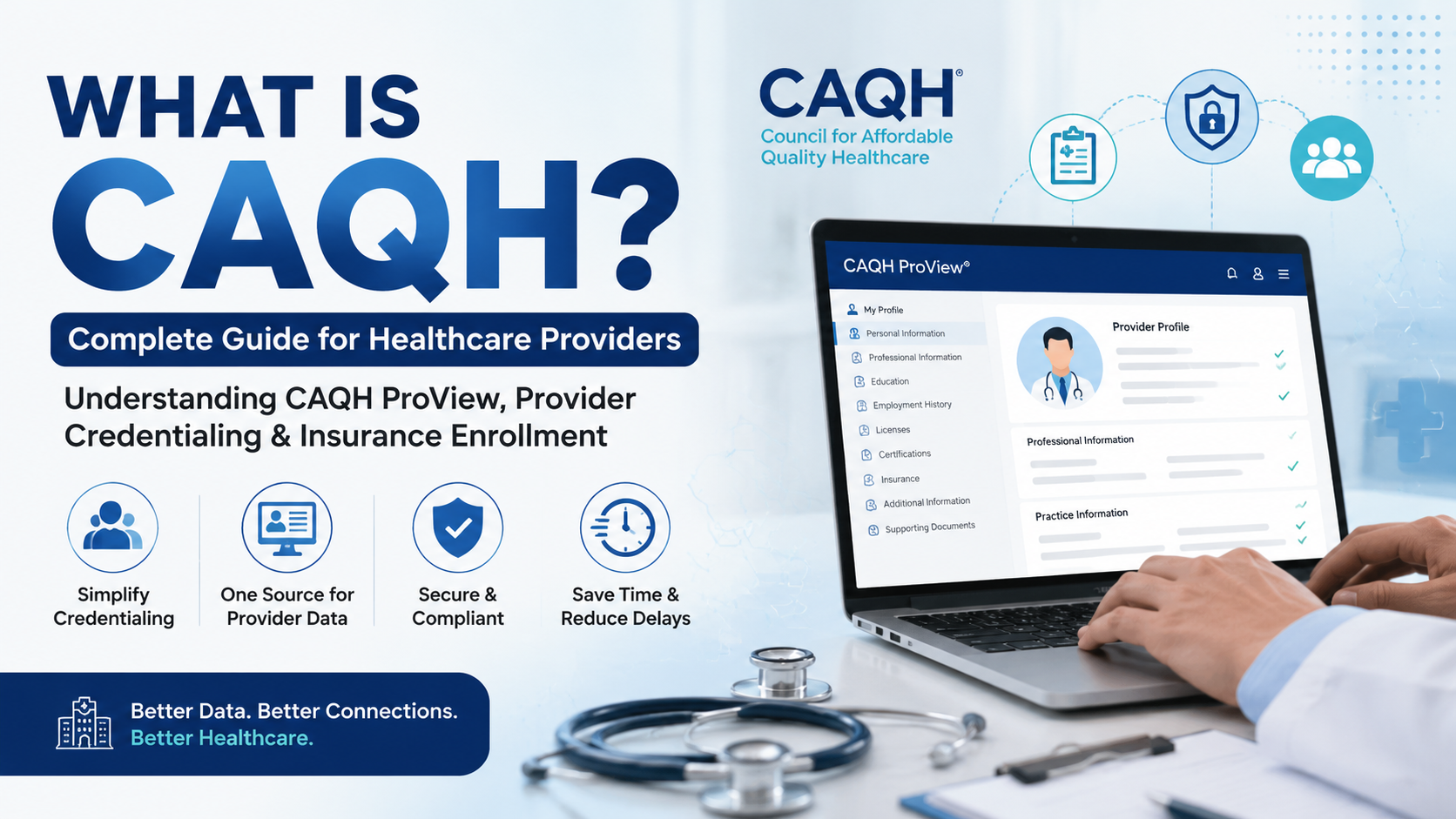
- CAQH profile (in some states)
- Business license (for organizations)
- Provider agreement
Verification checks include:
- License verification
- Background check
- Sanctions screening (OIG, SAM databases)
- Education and training validation
How do you apply for Medicaid credentialing step by step?
You apply by completing your state Medicaid enrollment and submitting required documents through a provider portal.
How do you obtain an NPI before applying?
You must first get an NPI, which is a unique identifier for healthcare providers.
Steps:
- Apply online via the National Plan and Provider Enumeration System (NPPES)
- Choose the correct taxonomy code
- Receive NPI within a few days
How do you complete the Medicaid provider application?
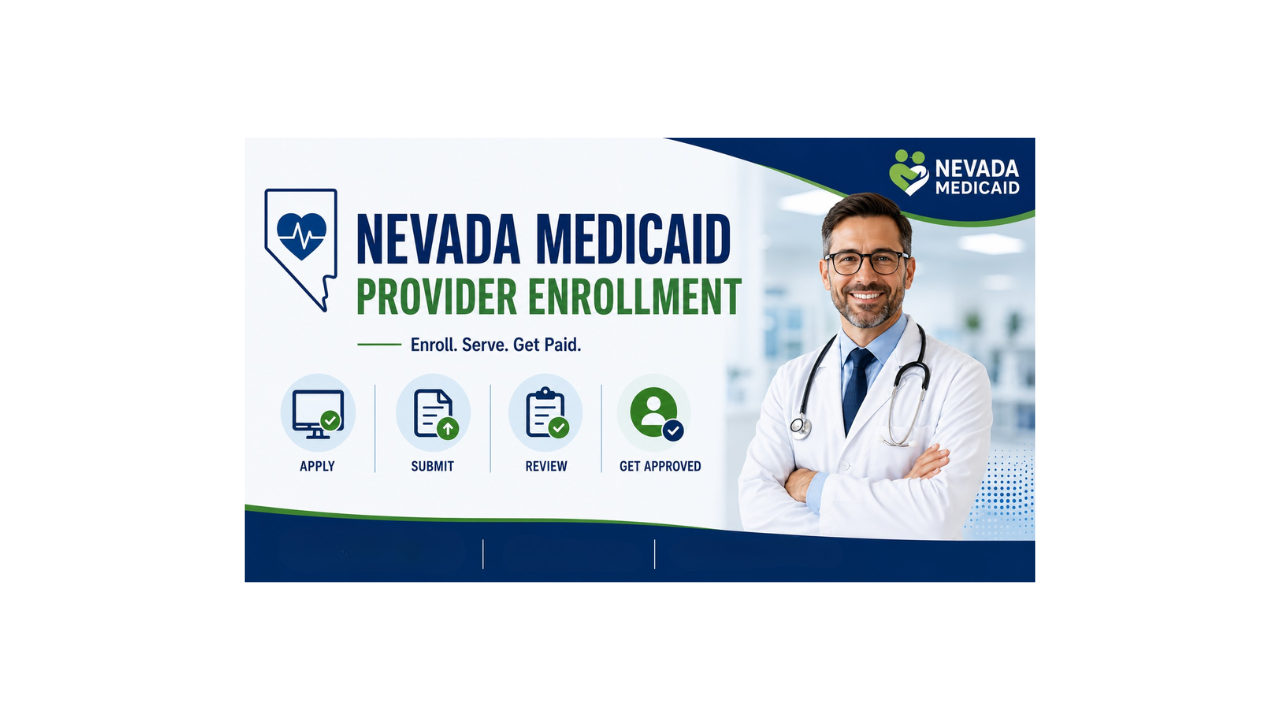
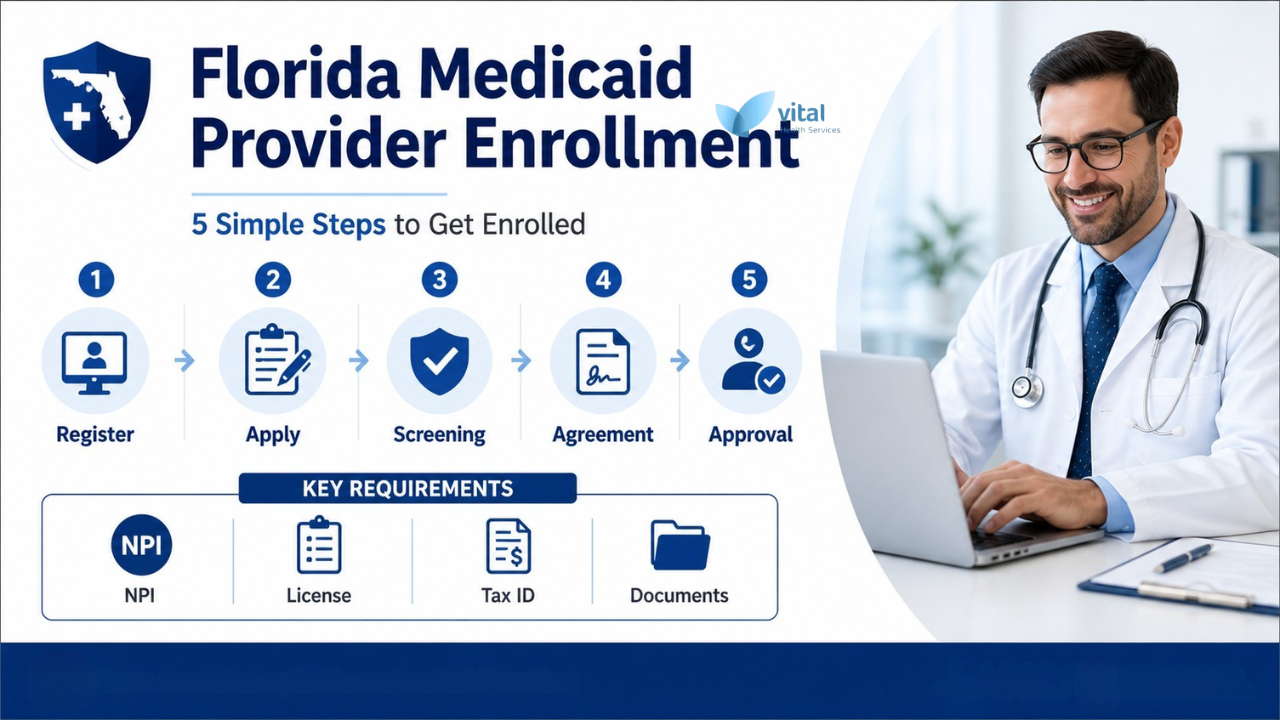
You submit your application through your state Medicaid portal.
Step-by-step process:
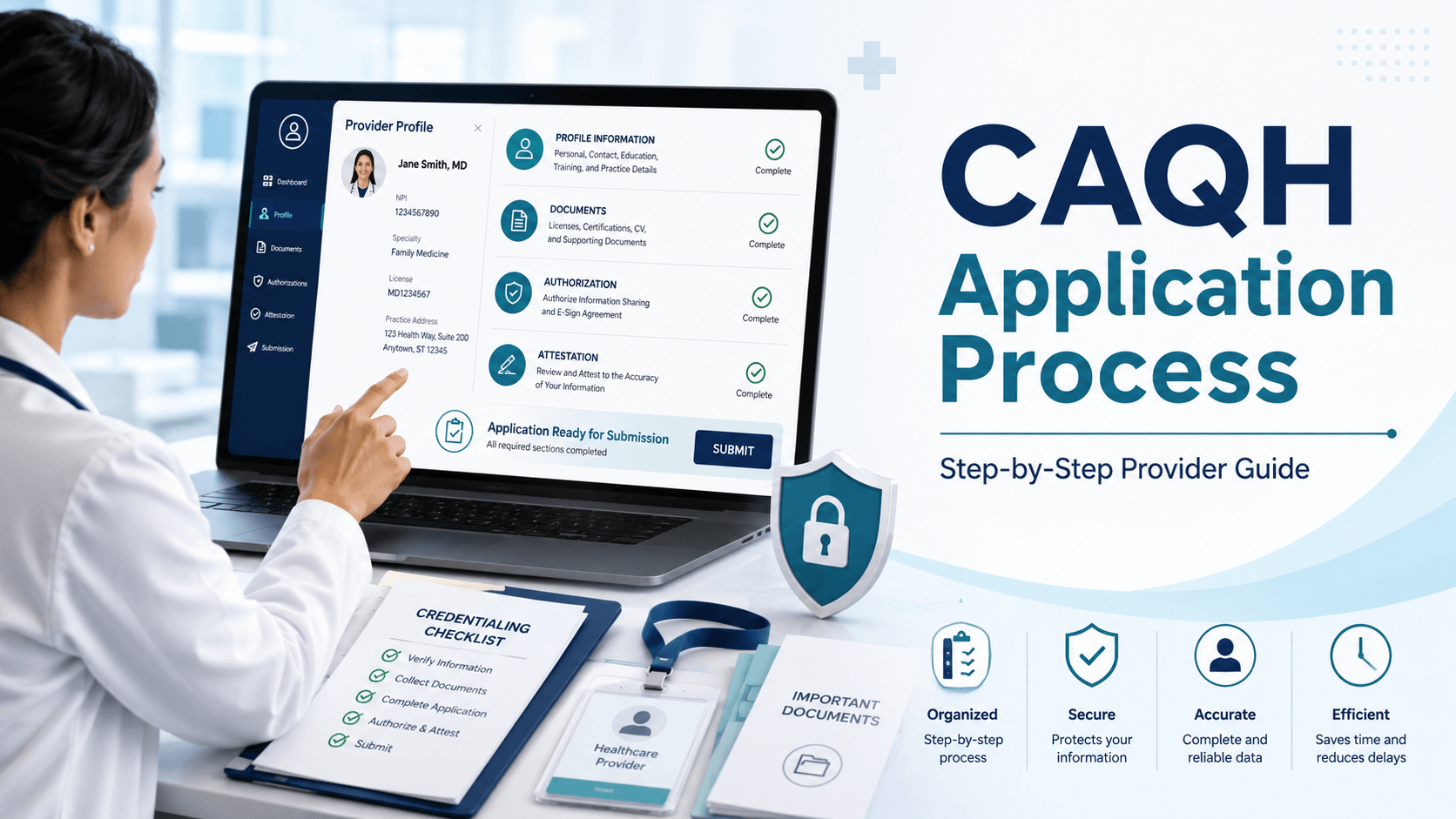
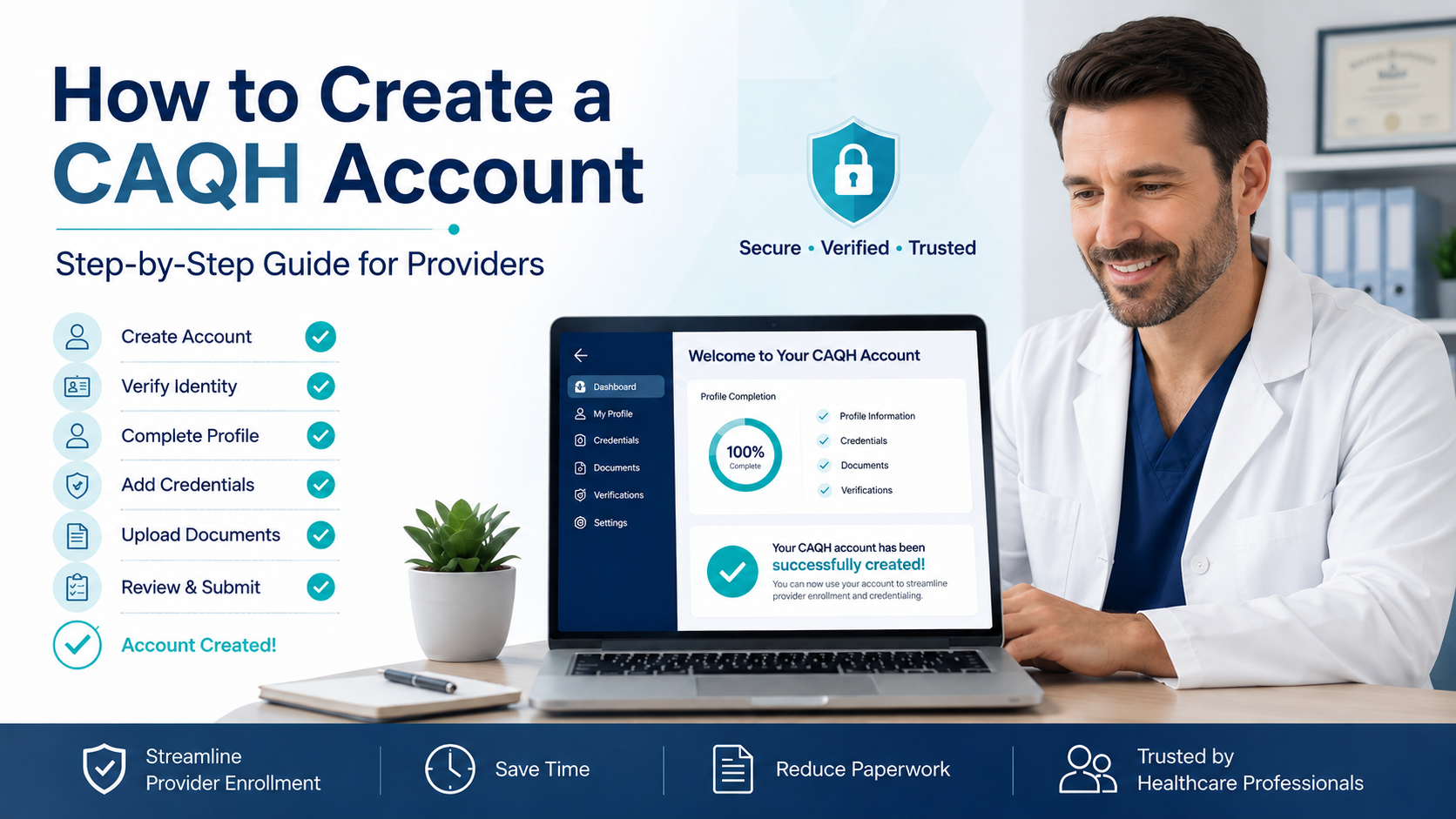
- Create an account on your state Medicaid provider portal
- Complete the provider enrollment application
- Upload all required documents
- Sign the Medicaid provider agreement
- Submit for review
Tips:
- Ensure all information matches your NPI record
- Double-check licenses and expiration dates
- Keep copies of everything submitted
How do you enroll in managed care organizations (MCOs)?
After Medicaid approval, you must credential with MCOs to see patients under managed plans.
Steps:
- Identify Medicaid MCOs in your state
- Submit separate credentialing applications
- Provide CAQH profile (often required)
- Sign contracts with each MCO
What happens during Medicaid provider screening and verification?
Medicaid screening is a mandatory review process to assess provider risk and eligibility.
Providers are categorized into risk levels (limited, moderate, high), which determines screening intensity.
Screening may include:
- Identity verification
- Criminal background check
- Site visit (for high-risk providers)
- Database checks (fraud, abuse, sanctions)
CMS requires these screenings to reduce fraud and protect Medicaid funds.
How long does Medicaid credentialing take?
Medicaid credentialing typically takes 30 to 90 days, but timelines vary by state and application completeness.
Factors affecting timeline:
- State processing speed
- Missing or incorrect documents
- Background check delays
- Provider type (individual vs organization)
Typical timeline breakdown:
- Application review: 2–4 weeks
- Verification checks: 2–6 weeks
- Final approval: 1–2 weeks
What happens after Medicaid credentialing is approved?
After approval, you receive a Medicaid provider number and can begin billing.
Next steps:
- Set up billing systems
- Enroll in Electronic Funds Transfer (EFT)
- Submit claims through the Medicaid portal
- Track reimbursements
Important:
You must follow Medicaid billing rules to avoid claim denials.
What are common mistakes that delay Medicaid credentialing?
Most delays are caused by incomplete or incorrect applications.
Common mistakes:
- Missing documents
- Mismatched NPI and application data
- Expired licenses
- Incorrect taxonomy codes
- Not updating the CAQH profile
- Ignoring follow-up requests
How to avoid delays:
- Double-check all entries
- Keep documents updated
- Respond quickly to state requests
Medicaid credentialing vs Medicare credentialing: what’s the difference?
Both processes are similar but managed differently.
| Feature | Medicaid Credentialing | Medicare Credentialing |
|---|---|---|
| Administration | State-run | Federal (CMS) |
| Application Portal | State Medicaid portal | PECOS system |
| Requirements | Vary by state | Standardized |
| Timeline | 30–90 days | 60–120 days |
| MCO involvement | Yes | No |
Key Takeaways
- Medicaid credentialing allows providers to bill Medicaid and receive payment
- Each state manages its own enrollment process
- You must have an NPI and a valid license before applying
- The process includes application, screening, and verification
- Most approvals take 30–90 days
- Errors and missing documents are the main causes of delays
FAQs
How do I start Medicaid credentialing?
Start by obtaining an NPI and applying through your state Medicaid provider portal.
Do I need CAQH for Medicaid?
Some states and MCOs require a CAQH profile, but not all Medicaid programs do.
Can I bill Medicaid before credentialing is approved?
No, you must be fully approved and assigned a provider number before billing.
How do I check my Medicaid application status?
Log into your state Medicaid provider portal or contact the enrollment department.
Is Medicaid credentialing different in every state?
Yes, each state has its own process, but all follow CMS federal guidelines.
What is a Medicaid provider number?
It is a unique ID assigned after approval that allows you to bill Medicaid.
Do group practices need separate credentialing?
Yes, both individual providers and group practices must enroll separately.