What Are Hospital Privileges and How Do Medical Credentialing and Privileging Work?
Hospital privileges are the rights granted to healthcare providers to practice and perform specific tasks within a hospital or healthcare facility. These privileges are granted after thorough credentialing and privileging processes, which ensure that healthcare professionals meet the required qualifications, competencies, and legal standards to provide safe and effective care.
Table of Contents
ToggleThe credentialing and privileging process helps to protect patient safety, maintain high standards in medical practice, and ensure that healthcare providers are qualified to perform specific procedures or take on certain responsibilities within the hospital setting.
Understanding the key differences between credentialing and privileging, as well as the types of privileges granted, is crucial for healthcare providers and administrators alike. This article will break down the processes and explore key considerations when it comes to hospital privileges.
What Are Hospital Privileges in Healthcare?
Hospital privileges refer to the specific rights granted to healthcare providers to perform certain procedures or tasks within a healthcare facility. These rights are not automatic and are granted only after a thorough evaluation of a provider’s credentials and clinical competencies.
Why Hospital Privileges Matter?
Hospital privileges are vital for ensuring that the right professionals are providing care in the right settings. They ensure that providers are competent, licensed, and well-suited to perform particular clinical tasks, such as surgeries or patient admissions.
Types of Hospital Privileges
- Admitting Privileges: Rights to admit patients to the hospital for treatment.
- Surgical Privileges: Rights to perform surgeries within the hospital.
- Telemedicine Privileges: Rights to provide care via telemedicine platforms.
How Does the Credentialing Process Work?
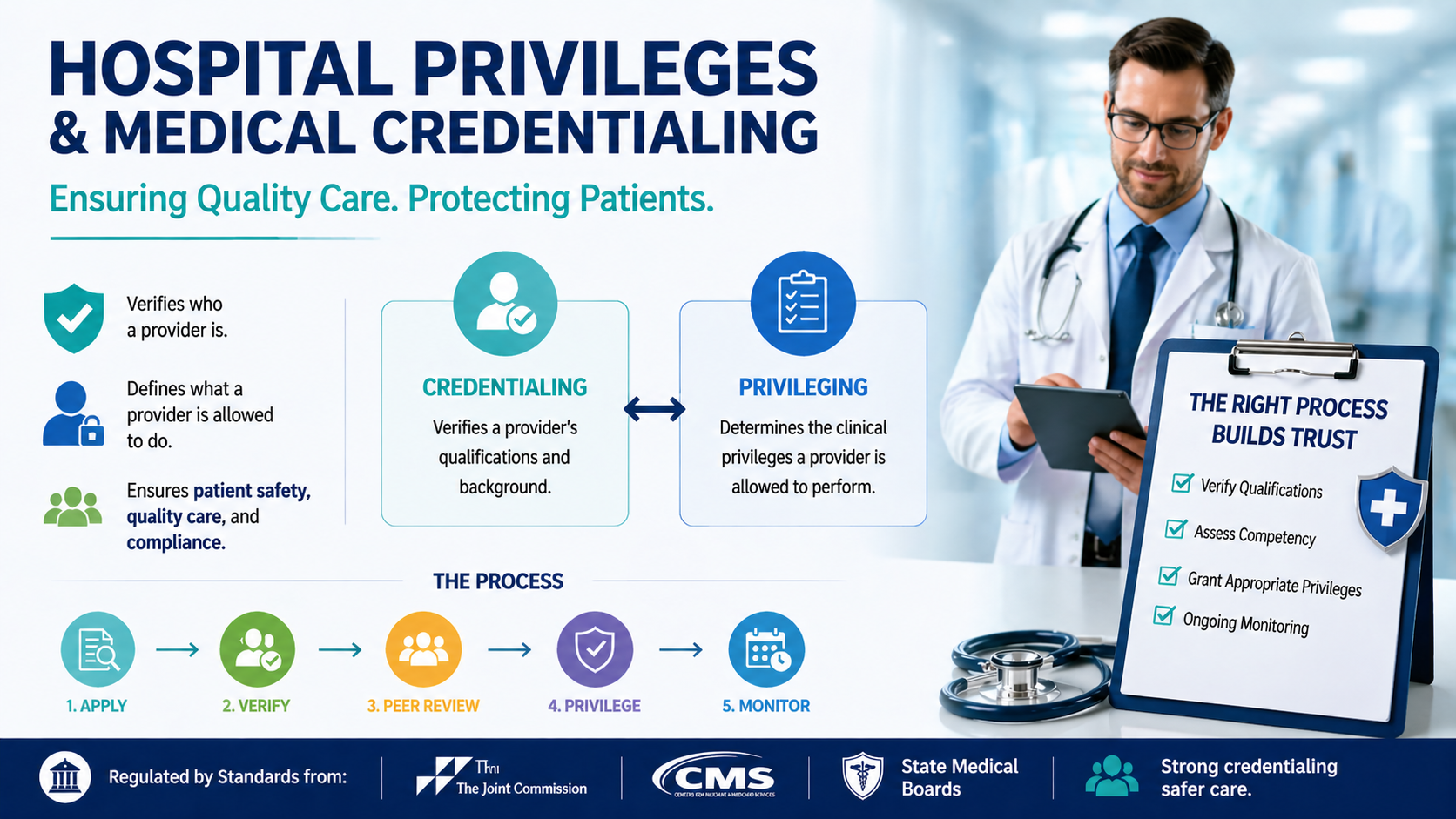
Credentialing is the process by which hospitals verify the qualifications, education, and professional experience of healthcare providers before granting them privileges.
Steps in Credentialing
- Application: The healthcare provider submits an application detailing their education, training, work experience, and professional qualifications.
- Verification: The hospital or healthcare facility performs primary source verification to ensure all submitted information is accurate.
- Review: A credentialing committee reviews the application, ensuring the provider meets the necessary standards.
- Approval: If the provider meets all criteria, the credentials are approved, and privileges are granted.
Primary Source Verification
This is a critical part of the process, where the hospital directly contacts educational institutions, licensing bodies, and other authoritative sources to confirm the provider’s credentials and history.
What is the Difference Between Credentialing and Privileging?
While credentialing refers to the verification of a healthcare provider’s qualifications, privileging is the process by which hospitals grant the provider specific rights to practice certain procedures or provide certain services.
Credentialing involves confirming qualifications, licensing, and experience, while privileging involves granting permission to perform clinical activities within the hospital, based on those verified credentials.
What Are the Different Types of Hospital Privileges?
Hospital privileges can vary depending on the healthcare facility and the provider’s specialty. Common types of hospital privileges include:
- Admitting Privileges: Allow physicians to admit patients to the hospital for care.
- Surgical Privileges: Give physicians the right to perform surgeries within the hospital.
- Temporary Privileges: Granted for short-term needs, often in emergencies or during the onboarding process.
- Telemedicine Privileges: Allow healthcare providers to offer services remotely via telemedicine.
How Do Hospital Bylaws and Healthcare Compliance Impact Privileging?
Hospital bylaws and compliance regulations are integral to ensuring that the privileging process aligns with industry standards and regulations.
Role of CMS and the Joint Commission
Healthcare facilities must adhere to the requirements set by the Centers for Medicare & Medicaid Services (CMS) and the Joint Commission. These organizations set specific standards for credentialing and privileging that hospitals must follow.
Peer Review Process
The peer review process helps ensure that providers maintain the clinical competencies necessary to perform their duties. It often involves the evaluation of a provider’s performance by other healthcare professionals in the same field.
What Common Mistakes Should Healthcare Professionals Avoid in Credentialing and Privileging?
Some common mistakes include:
- Failing to maintain up-to-date credentialing information.
- Overlooking primary source verification.
- Not adhering to reappointment deadlines.
- Granting privileges without proper evaluation or review.
Key Takeaway
Hospital privileges are essential for maintaining high standards of care and patient safety. Both credentialing and privileging are critical in ensuring healthcare providers meet the necessary qualifications. Hospitals must follow rigorous procedures and regulations to ensure that these processes are handled appropriately, benefiting both healthcare providers and the patients they serve.
FAQ
1. What are hospital privileges?
Hospital privileges are rights granted to healthcare providers to perform specific tasks within a hospital, such as performing surgeries or admitting patients.
2. What is the difference between credentialing and privileging?
Credentialing verifies a provider’s qualifications, while privileging grants them rights to perform certain tasks in the hospital based on those qualifications.
3. How do I get hospital privileges?
You must undergo the credentialing process, which includes submitting documentation of your qualifications and completing primary source verification.
4. What is the credentialing process in healthcare?
Credentialing involves verifying a healthcare provider’s qualifications, education, licensing, and professional experience to ensure they meet hospital standards.
5. What are admitting privileges?
Admitting privileges allow a healthcare provider to admit patients to the hospital for treatment.
6. Why is peer review important in the privileging process?
Peer review ensures that healthcare providers maintain the necessary competencies and perform their duties safely and effectively.
7. What are temporary hospital privileges?
Temporary privileges are granted for short-term needs, such as covering for a provider during their absence or in urgent situations.