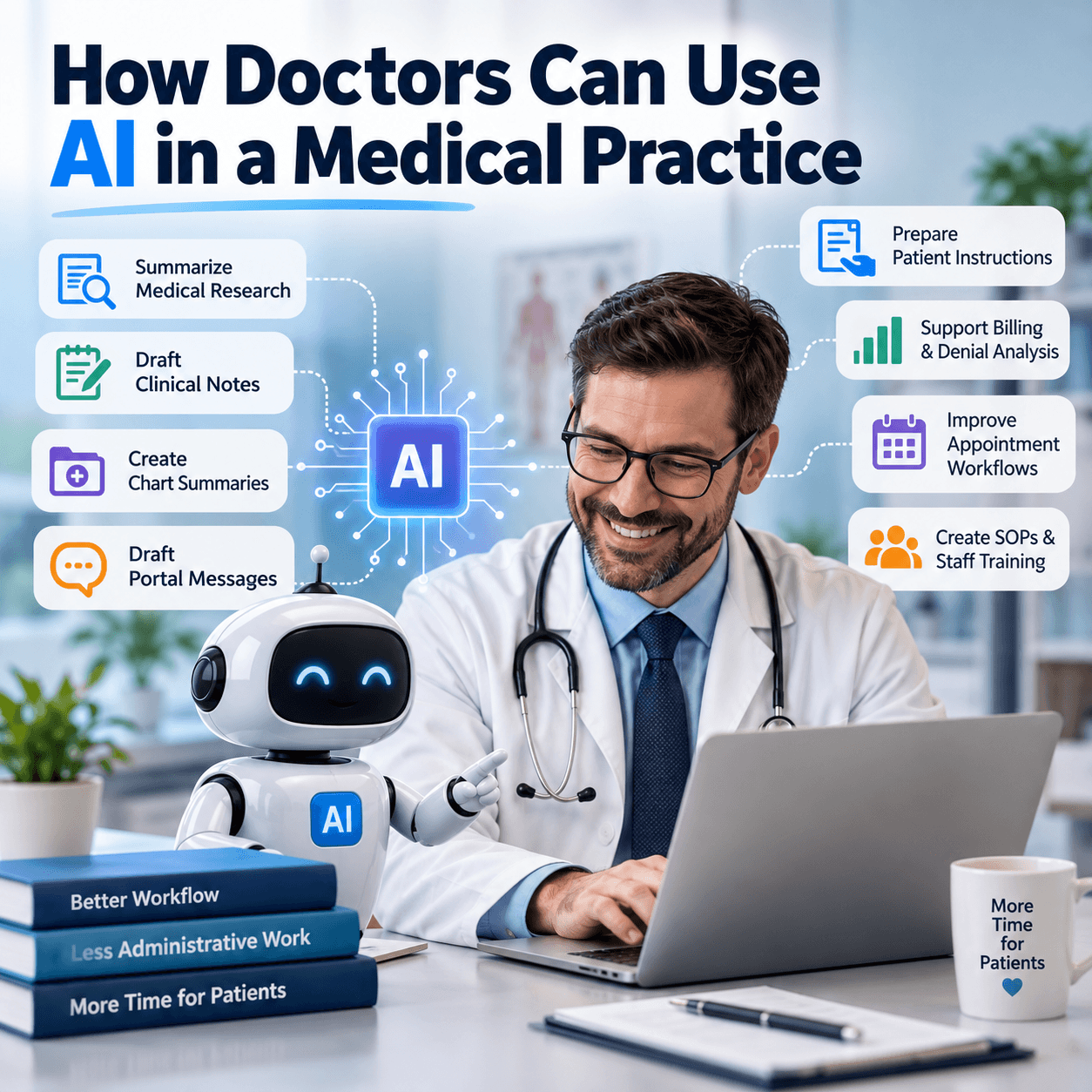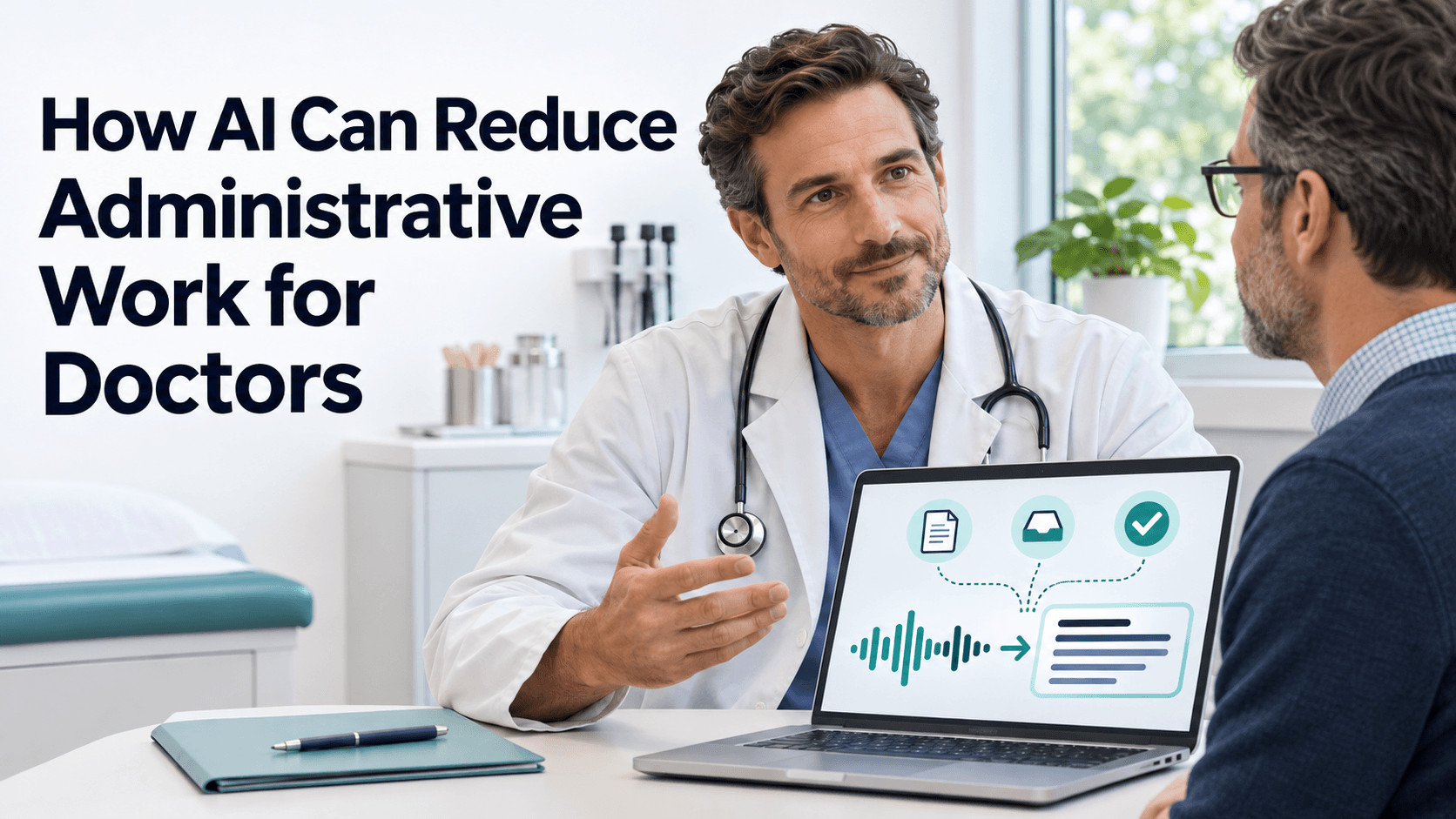
AI can reduce administrative work for doctors by drafting visit notes, organizing patient messages, and preparing paperwork for referrals, prior authorizations, and billing. It saves time when reviewing the output takes less effort than doing the task from scratch. If doctors spend that time correcting errors or switching between systems, the work has moved rather than disappeared.
Overview of Content
ToggleHow AI Can Reduce Administrative Work
1. Draft Clinical Notes During Patient Visits
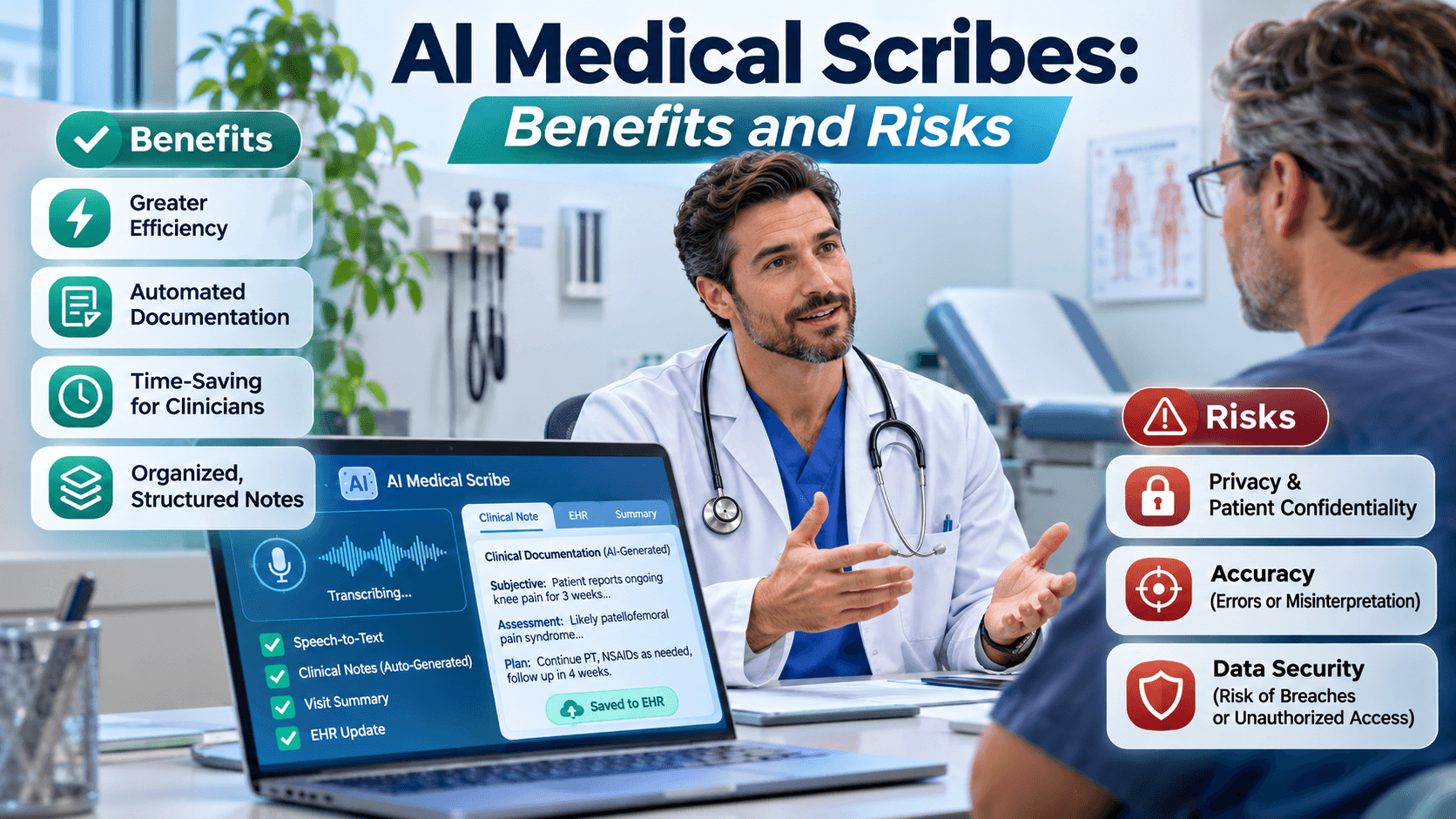
An ambient AI medical scribe uses the conversation during a visit to draft a note for the electronic health record (EHR). Instead of writing the entire note afterward, the doctor reviews the draft, corrects errors, and signs it.
In a 2025 randomized trial involving 238 outpatient physicians across 14 specialties, one of two AI scribes reduced time spent in notes by nearly 10% compared with usual care. The other did not show a significant reduction on that measure. The difference matters for practices evaluating software. Two tools designed for the same job may not save the same amount of time. pmc.ncbi.nlm.nih.gov
The review step is especially important for medication changes, exam findings, and follow-up plans. A draft might turn a treatment discussed as an option into one the doctor appears to have ordered.
2. Draft Replies to Patient Portal Messages
AI can give doctors and staff a starting point for routine portal replies, such as follow-up scheduling instructions or answers to common office questions. Messages about new symptoms, medication changes, or abnormal results should go through the practice’s clinical review process.
A five-week study of 162 clinicians found that AI drafts reduced perceived workload on some measures but did not reduce measured messaging time. A draft can make a reply easier to start without making it faster to finish. Practices should measure both the time spent reviewing replies and how often staff use the drafts. pmc.ncbi.nlm.nih.gov
3. Prepare Referral and Prior Authorization Paperwork
AI can pull existing details from the chart into a draft referral or prior authorization request. For example, it can gather the dates of previous treatments and summarize documented results, saving staff from searching through several notes.
The useful output is a draft that shows where the information came from and flags what is missing. The tool should not invent a treatment history or present a payer requirement as satisfied when the record does not support it. Staff still need to confirm the current requirements and review the request before submission.
4. Flag Billing and Coding Questions Earlier
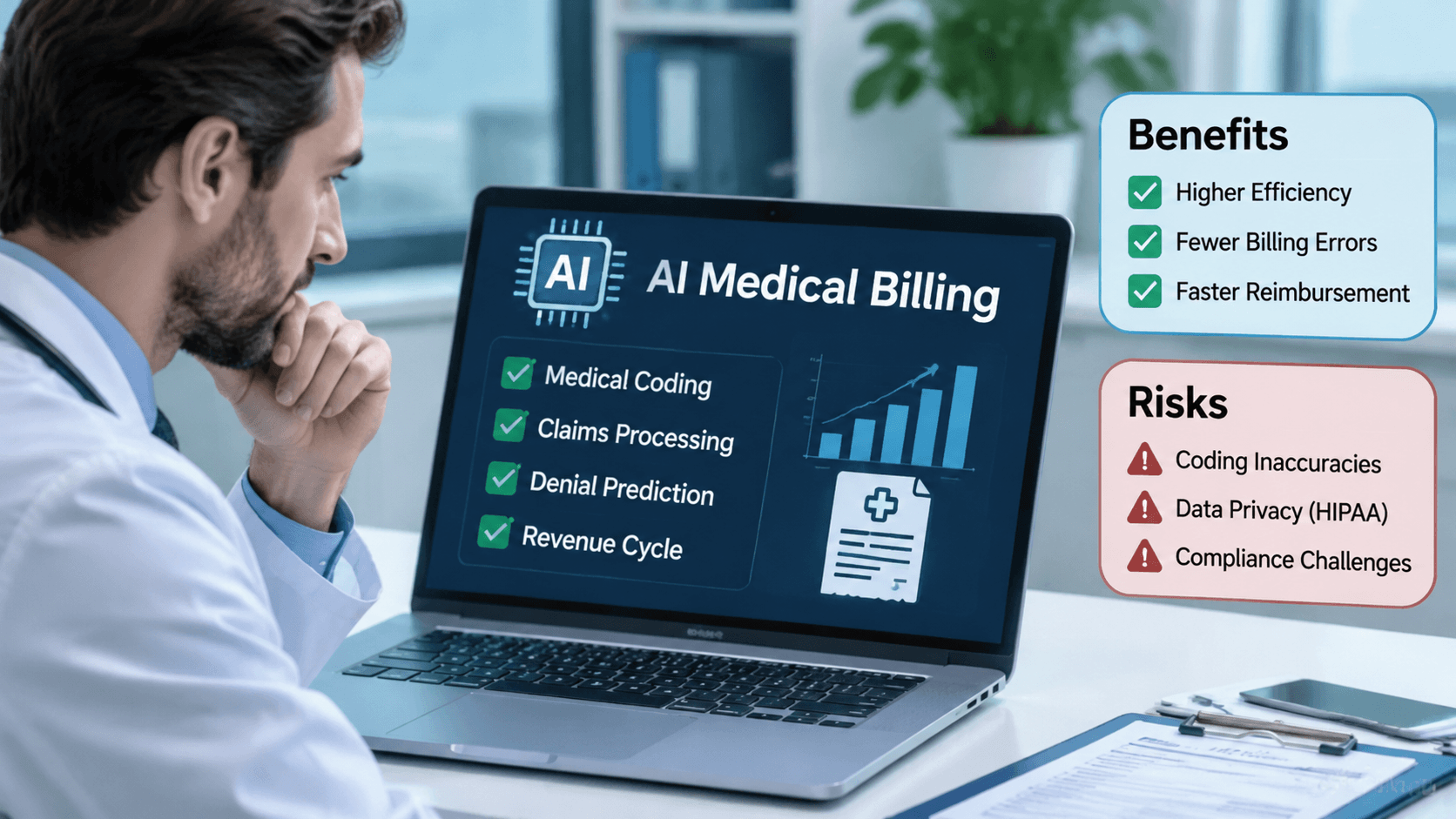
AI can reduce billing-related interruptions by flagging documentation gaps before a claim is submitted. A coding tool might suggest a code or point out that a note lacks the detail needed to support a billing decision. The coding team can then ask the doctor a specific question instead of sending the entire chart back for review.
A suggested code is not proof that the service was performed or documented. The U.S. Government Accountability Office notes that AI coding accuracy can be difficult to verify and that errors can lead to overpayment or underpayment.
What Are the Risks of Using AI for Administrative Work?
The main risks are inaccurate records, exposure of patient information, and extra review work that goes unmeasured. A tool can produce a polished note with a missing allergy or send more messages into a doctor’s queue instead of helping the team resolve routine requests.
For U.S. practices, vendor review is part of the decision. HHS says a HIPAA-compliant business associate agreement is required when a cloud provider creates, receives, maintains, or transmits electronic protected health information on behalf of a covered entity or business associate. Practices should also check who can access the data, how long it is retained, and whether the vendor can use it for model training.
How Can Practices Tell Whether AI Is Saving Doctors Time?
Measure the whole task, from opening the chart to approving the final note, reply, or form. A draft generated in seconds is not much help if it takes several minutes to verify or correct.
- Choose one recurring task. Start with visit notes if doctors regularly finish charts after hours, or with routine portal replies if the inbox is the bigger problem.
- Record a baseline. Track time per task, after-hours work, and how often staff have to redo or correct work.
- Include everyone’s review time. If doctors save time but nurses or billing staff spend longer fixing drafts, the workload may simply have shifted.
- Check quality before expanding. Look for missing details, unsupported statements, and delayed follow-ups alongside any time savings.
FAQs
Can AI reduce physician burnout?
AI may reduce one contributor to burnout by making documentation or inbox work easier. That is not the same as showing a lasting reduction in burnout. Practices should track after-hours work and staff experience rather than assume faster drafting improves both. UCLA Health
What is the best administrative task to automate first?
Start with a frequent task that is easy to check and costly enough to matter. If visit notes are the main source of after-hours work, test an AI scribe. If the problem is missing fields on routine forms, a simple rule or template may be enough.
Conclusion
AI is most useful when it removes a specific step doctors and their teams repeat every day. Start with one workflow, count the time spent reviewing and correcting the output, and expand only if the practice gets time back without sacrificing accuracy.