AI for Medical Billing: What Practices Should Know
AI for medical billing helps practices suggest codes, catch claim errors before submission, and prioritize unpaid claims. It can reduce repetitive work, but it can also spread the same error across many claims. For U.S. practices, the best place to start is one billing task with a measurable problem and a clear review process.
Table of Contents
ToggleWhat Is AI for Medical Billing?
AI for medical billing uses software to interpret clinical notes, analyze claims data, and recommend what billing staff should review. It supports revenue cycle management (RCM), the process of managing payment from patient registration through final account resolution.
Not every automated billing task needs AI. A rule can flag an empty insurance member ID field. An AI tool can interpret a clinical note and suggest a diagnosis code or use past claims to identify which new claims are more likely to be denied. That distinction matters when deciding what software to buy and how closely to review its output.
How Does AI Fit Into the Medical Billing Workflow?
AI can help at three points in the billing process: when staff assign codes, when they check claims before submission, and when they follow up on payments. The tool’s role at each stage depends on whether it is checking a known rule or interpreting information that may be ambiguous.
| Billing stage | What AI can do | What staff should verify |
|---|---|---|
| Medical coding | Suggest ICD-10-CM diagnosis codes or CPT and other HCPCS codes from clinical documentation | Confirm that the record supports the suggested code and any modifier |
| Pre-submission review | Flag conflicting information, missing documentation, or claims at higher risk of denial | Check whether the flag reflects a real problem and correct it when appropriate |
| Payment posting and follow-up | Match remittance records to claims and surface payment discrepancies | Verify exceptions before adjusting balances or billing patients |
What Are the Benefits of AI for Medical Billing?
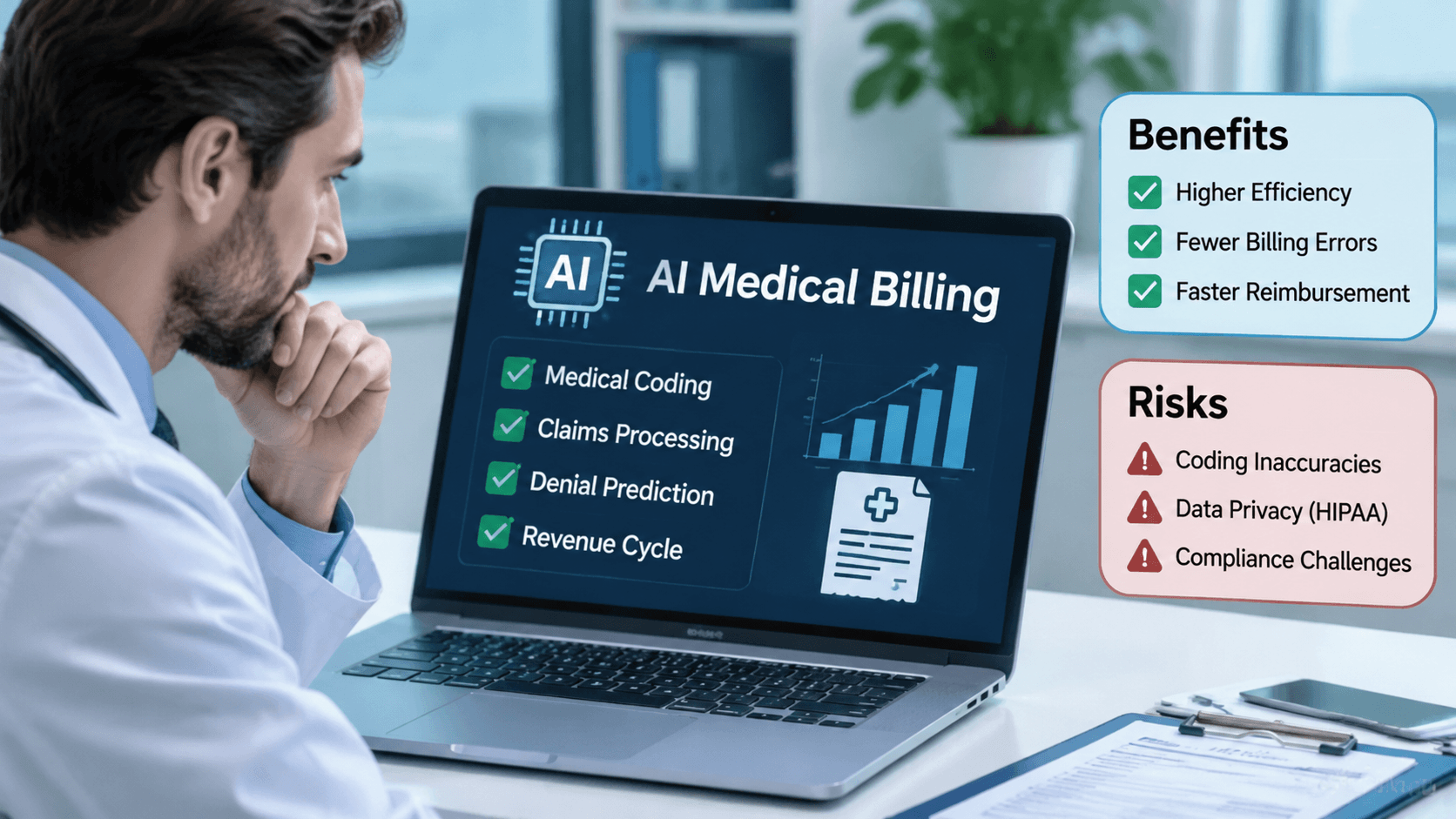
AI can help billing teams find errors sooner and spend less time sorting routine work. Whether it saves time or reduces denials depends on the problem the practice is trying to solve.
1. Catch Claim Problems Before Submission
AI can flag claims that need a closer look while staff still have time to correct them. For example, it can surface a claim with no authorization on file so a biller can check whether one was required.
Track rejections and denials separately. A claim can be rejected during initial checks and returned for correction. A claim that passes those checks can still be denied after the payer reviews it. Fewer rejections do not necessarily mean fewer denials.
2. Reduce Manual Review Time
AI can group similar billing issues so staff do not have to open every claim to find the ones that need attention. When measuring time savings, include the time spent dismissing false alerts and fixing mistakes the tool missed.
3. Prioritize Unpaid Claims
AI can help staff identify which outstanding claims need attention first, such as claims approaching a filing deadline or payments that differ from the expected amount. A useful test is whether the tool catches cases your current work queue misses without burying staff in extra alerts.
A 2026 systematic review of 29 studies found that none reported validation on independent external data or prospective testing in routine operations. That does not mean the tools cannot help. It means a published accuracy figure is not a reliable forecast for your practice.
What Are the Risks of AI for Medical Billing?
The main risks are unsupported codes, exposure of patient information, and repeated errors that go unnoticed because staff trust the software’s output.
1. Incorrect Codes and Outdated Rules
An AI tool can mistake a condition listed in a patient’s family history for the patient’s own diagnosis. It can also suggest a modifier the record does not support. Ask the vendor whether reviewers can see the note text behind each suggestion and how the software stays current with coding rules. For Medicare claims, CMS publishes the National Correct Coding Initiative policy manual and related edits.
2. Patient Privacy and Vendor Access
AI billing software can expose sensitive information if the practice does not understand where the data goes or who can access it. HHS says a HIPAA-compliant business associate agreement (BAA) is required when a cloud provider creates, receives, maintains, or transmits electronic protected health information on behalf of a covered entity or business associate. A signed agreement does not replace the practice’s own risk analysis. Ask where data is stored, how long it is retained, and whether the vendor uses it to train models.
3. Errors That Spread Across Claims
One faulty mapping or outdated rule can affect an entire batch. Keep a record of the original suggestion, any staff edits, and the final submission. Audit a sample of unflagged claims too, since reviewing only alerts tells you what the tool caught, not what it missed. The U.S. Government Accountability Office notes that coding errors can contribute to both overpayment and underpayment.
How Should a Practice Pilot AI Billing Software?
Start with a tool that flags problems for review without automatically changing or submitting claims. For example, test whether it can identify incomplete claims for one major payer more efficiently than your current process.
- Measure the baseline. Record the issue rate, staff review time, and rework before introducing the tool.
- Run it alongside your existing workflow. Compare its flags with staff findings across both routine and unusual claims.
- Check how it fits your systems. Verify that it works with your electronic health record (EHR), practice management software, and clearinghouse. Make sure staff can override suggestions and trace who changed a claim.
- Expand only if the results justify it. Look for less rework without more coding errors or missed issues. Include subscription, integration, training, and review time in the cost comparison.
FAQs
Can AI prevent medical billing denials?
AI may help prevent some avoidable denials by flagging issues staff can fix before submission. A denial prediction is a reason to review a claim, not a guarantee of coverage or payment.
Can AI replace medical billers and coders?
AI can take over some repetitive checks, but practices still need people to interpret unclear documentation, review complex coding, handle payer exceptions, and manage appeals.
How is AI medical billing different from an AI medical scribe?
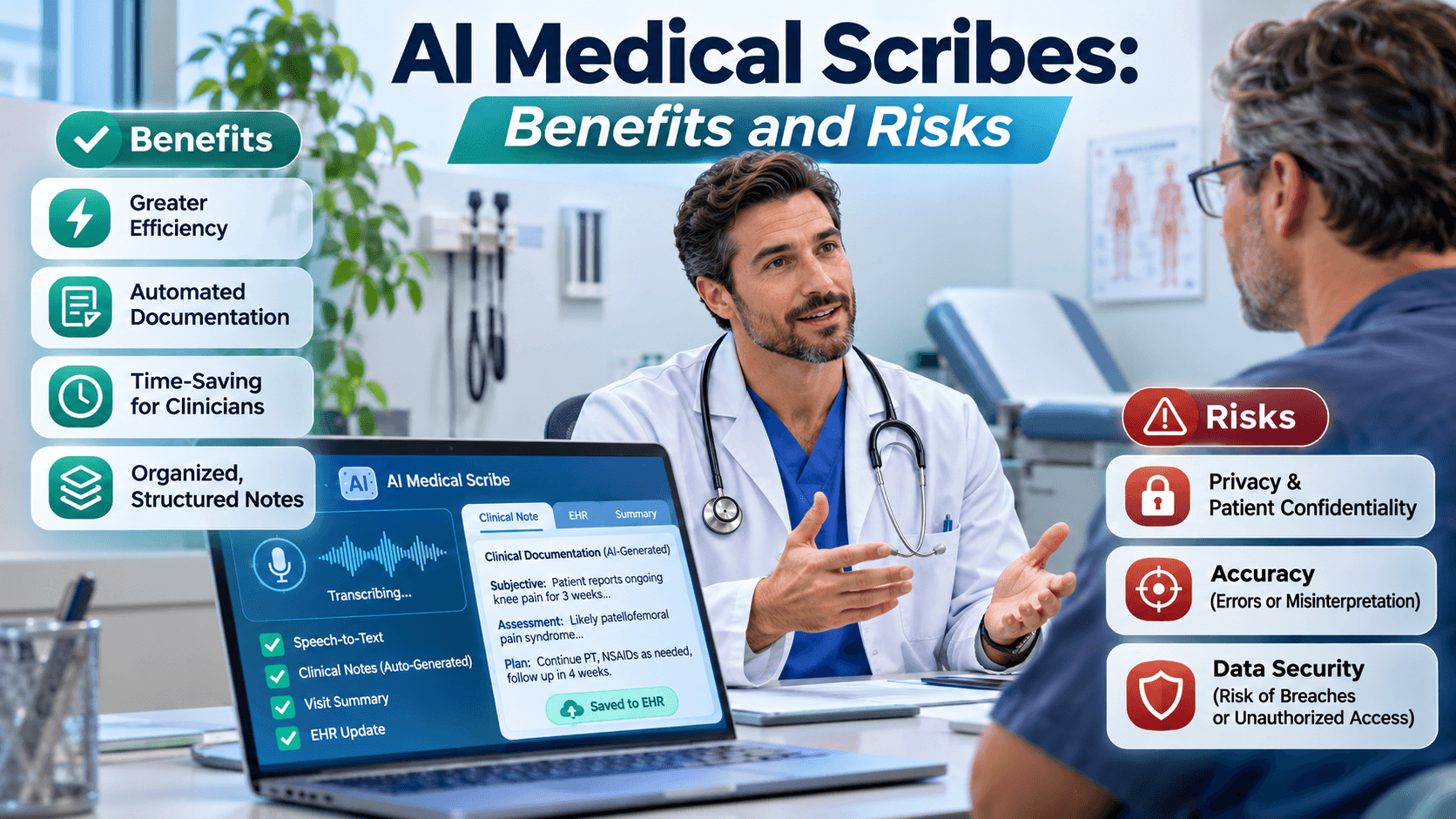
An AI medical scribe drafts a clinical note from a patient encounter. An AI billing tool uses documentation and claims data to assist with coding or payment workflows. Reviewing the scribe’s draft before it feeds into billing helps prevent a note-taking error from becoming a claim error.
Conclusion
AI for medical billing is most useful when it solves a problem your practice can measure. Start with one task, keep staff in control of claim changes, and expand only when your own results show less rework without sacrificing accuracy.