What CAQH Errors Delay Provider Enrollment and How Can You Fix Them?
Provider enrollment delays are often caused by small CAQH errors that prevent insurance payers from verifying provider information accurately. Common issues include incomplete profiles, outdated documents, expired attestations, incorrect practice details, and mismatched credential information.
CAQH errors delay enrollment because insurance companies rely on CAQH ProView data to verify provider qualifications, practice information, and supporting documents before approving network participation.
For physicians and healthcare organizations, even a minor CAQH mistake can slow down payer enrollment, delay patient access, and postpone reimbursement.
Understanding the most common CAQH problems helps providers identify errors early, maintain accurate credentialing information, and avoid unnecessary enrollment delays.
Table of Contents
ToggleWhat Is CAQH and Why Does It Matter for Provider Enrollment?
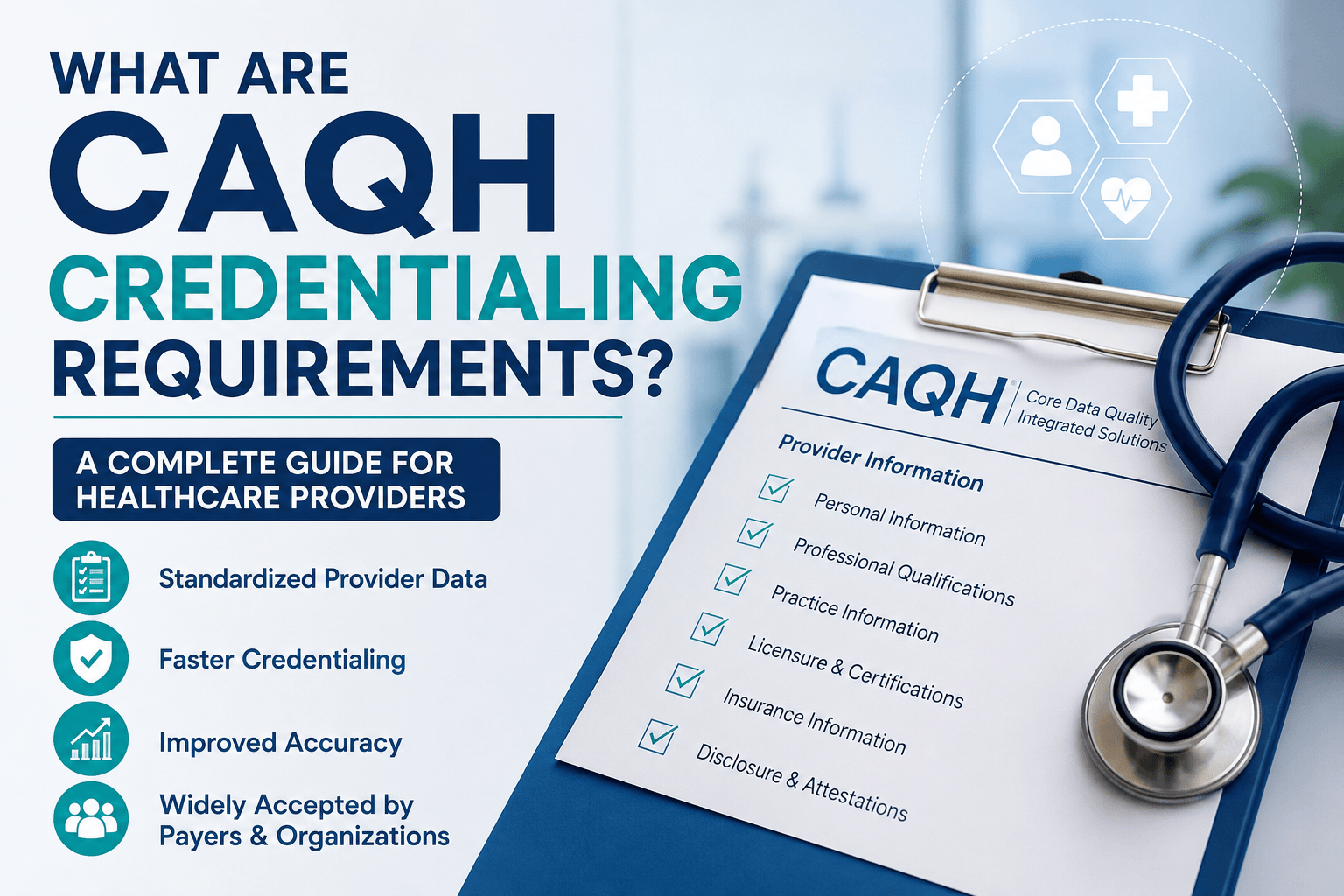
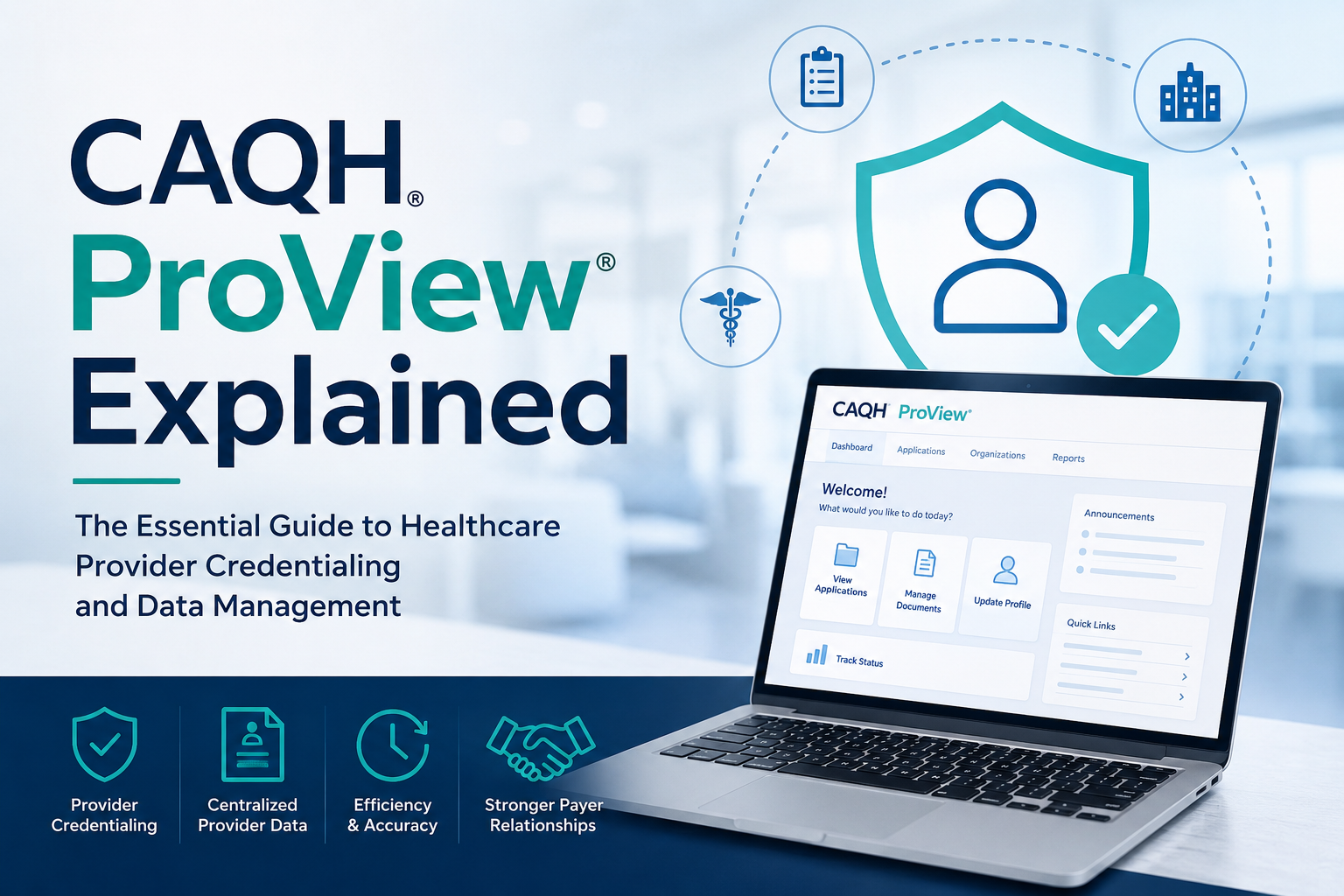
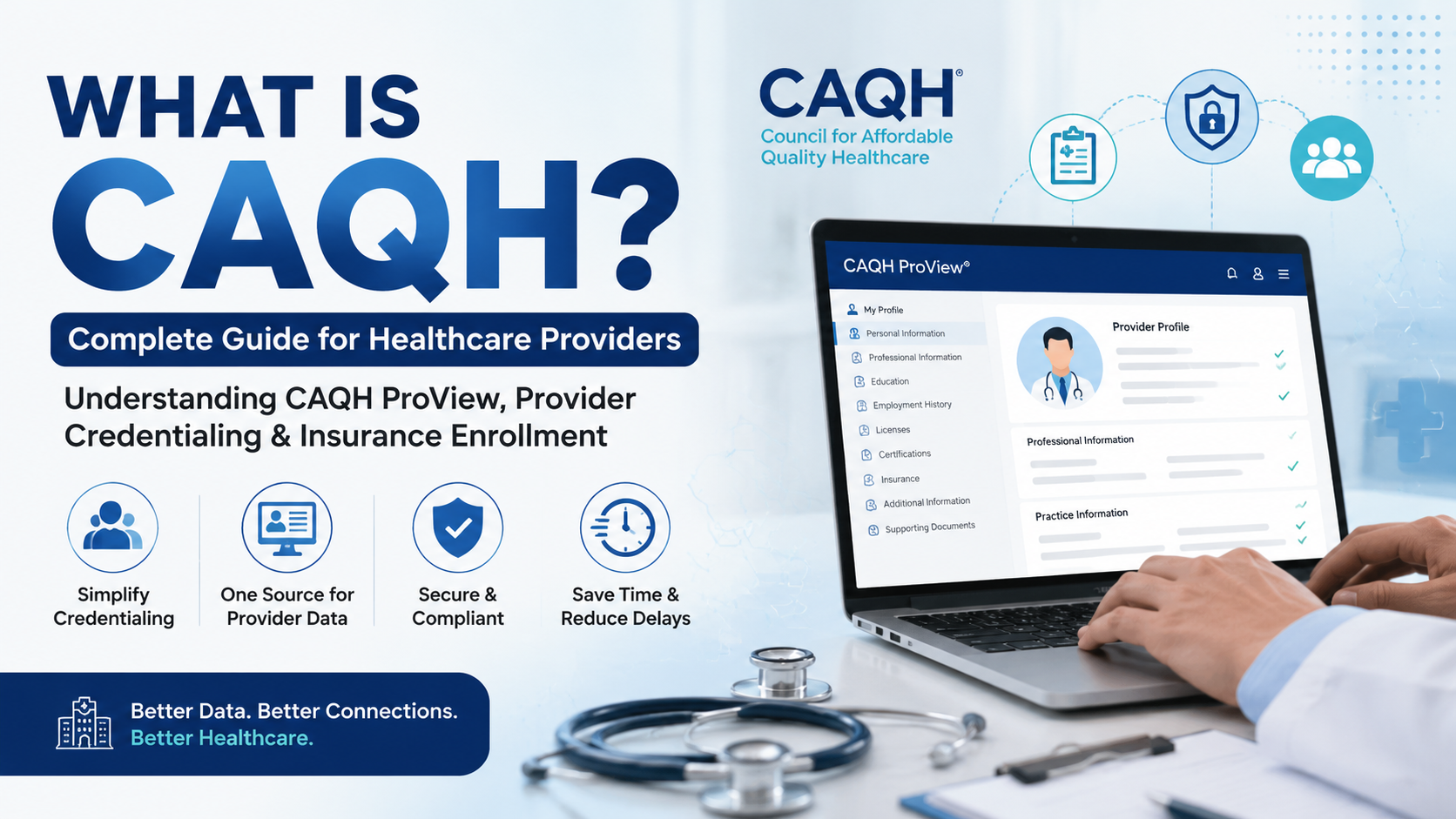
CAQH ProView is a centralized provider data platform used by healthcare organizations and insurance payers to collect, verify, and maintain provider credentialing information.
The Council for Affordable Quality Healthcare (CAQH) created CAQH ProView to simplify the credentialing process by allowing providers to maintain one standardized profile that can be accessed by authorized healthcare organizations and payers.
Instead of completing separate credentialing forms for every insurance company, providers can maintain their professional information through CAQH.
CAQH information commonly includes:
- Provider demographics
- Education history
- Medical training
- Professional licenses
- Work history
- Hospital affiliations
- Malpractice insurance
- DEA registration
- Board certifications
- Practice locations
- Supporting documents
When this information is incomplete, outdated, or inconsistent, payers may place enrollment applications on hold until corrections are completed.
What CAQH Errors Commonly Delay Provider Enrollment?
The most common CAQH errors that delay provider enrollment are incomplete profiles, missing documents, expired credentials, inaccurate provider information, and failure to complete CAQH re-attestation.
These errors create delays because payer credentialing teams must verify every piece of provider information before approving enrollment.
The most frequent problems include:
| CAQH Error | Why It Causes Delays | Possible Impact |
|---|---|---|
| Expired CAQH attestation | Profile is not confirmed as current | Enrollment review may stop |
| Missing documents | Payers cannot verify credentials | Application returned for corrections |
| Incorrect demographics | Information does not match payer records | Manual verification required |
| License expiration | Provider cannot be verified as active | Credentialing hold |
| Work history gaps | Background verification issues | Additional review |
| Incorrect practice location | Payer cannot confirm service location | Enrollment delay |
| Data mismatch | CAQH conflicts with external databases | Additional investigation |
Why Does Incorrect Provider Information Create Enrollment Delays?
Incorrect provider information delays enrollment because payers must verify that CAQH data matches official records and submitted applications.
Provider demographic errors are among the easiest mistakes to make and one of the most common causes of credentialing problems.
Examples include:
- Wrong legal name
- Incorrect date of birth
- Incorrect specialty
- Wrong phone number
- Incorrect email address
- Outdated practice address
- Incorrect billing information
For example, if a provider’s CAQH profile lists an old practice location while the payer application contains a new address, the payer may pause enrollment until the information is corrected.
Common provider information mistakes include:
Incorrect Practice Locations
Providers often move offices, add new locations, or change employment relationships without updating CAQH.
Payers use practice location information to determine:
- Where services are provided
- Whether the location is eligible for network participation
- Whether provider directories contain accurate information
Name and Identity Mismatches
Provider information should match official records, including:
- State medical license
- NPI records
- DEA registration
- Government identification records
Even minor differences can trigger manual review.
Examples:
- Missing middle name
- Different spelling
- Previous surname not updated
How Do Missing or Expired Documents Affect CAQH Approval?
Missing or expired credential documents prevent payers from verifying provider qualifications, which can delay enrollment approval.
CAQH requires providers to maintain supporting documentation that proves their professional eligibility.
Important documents may include:
- Medical licenses
- DEA certificates
- Malpractice insurance certificates
- Board certifications
- Education certificates
- Training documentation
- Hospital privileges information
Which Missing Documents Most Often Cause Delays?
Expired Professional License
A provider cannot be credentialed if their professional license is expired or cannot be verified.
Credentialing teams typically verify:
- License status
- Expiration date
- State authorization
Expired Malpractice Insurance
Professional liability coverage is a major credentialing requirement.
Missing malpractice information may cause:
- Application delays
- Requests for updated certificates
- Temporary enrollment holds
Missing DEA Information
Providers who prescribe controlled substances may need valid DEA registration information.
Errors include:
- Expired DEA certificate
- Incorrect DEA number
- Missing DEA documentation
Why Does Expired CAQH Attestation Stop Credentialing Progress?
Expired CAQH attestation delays enrollment because payers may consider the provider profile unverified until the information is reviewed and confirmed.
CAQH requires providers to periodically confirm that their information remains accurate through re-attestation.
During re-attestation, providers confirm that:
- Contact details are correct
- Credentials are current
- Documents are accurate
- Professional information has not changed
A provider who forgets to re-attest may have a profile that appears incomplete or outdated.
What Happens When CAQH Attestation Expires?
Possible consequences include:
- Payers cannot access updated information
- Credentialing review pauses
- Enrollment applications require additional follow-up
- Provider onboarding takes longer
How Do Work History Gaps Cause Credentialing Problems?
Incomplete employment history can delay CAQH approval because credentialing teams must verify a provider’s professional background.
Most credentialing applications require a complete work history covering a specific period, commonly the previous years of professional activity.
Common problems include:
- Missing employment dates
- Unexplained gaps
- Incorrect employer names
- Missing training information
Examples of Work History Errors
A provider may forget to include:
- Residency training
- Fellowship programs
- Previous medical practices
- Temporary employment
- Locum tenens assignments
Credentialing teams may request clarification before completing verification.
Why Do License, DEA, and Malpractice Errors Delay Enrollment?
License, DEA, and malpractice errors delay enrollment because these documents prove that a provider is legally qualified and financially protected to deliver healthcare services.
Payers verify these credentials to reduce compliance risks.
Common problems include:
| Credential | Common Error |
|---|---|
| Medical License | Expired or incorrect license number |
| DEA Registration | Expired DEA or incorrect information |
| Malpractice Insurance | Missing certificate or outdated coverage |
| Board Certification | Incorrect certification dates |
Which CAQH Profile Sections Should Providers Check Before Enrollment?
Providers should review every CAQH section before starting payer enrollment to ensure all information is accurate, complete, and current.
A complete CAQH review should include:
How Should Providers Verify Personal and Practice Information?
Providers should confirm:
- Full legal name
- Specialty information
- Contact details
- Practice addresses
- Tax identification information
- NPI information
The information should match:
- NPI Registry
- State licensing boards
- Payer applications
How Should Credential Documents Be Managed in CAQH?
Credential documents should be reviewed regularly to ensure they are current, readable, and correctly uploaded.
Best practices include:
- Upload clear PDF copies
- Track expiration dates
- Replace outdated certificates
- Maintain consistent naming formats
Example:
Instead of:
“license.pdf”
Use:
“California_Medical_License_Expires_2027.pdf”
This makes document management easier.
Why Is Payer Authorization Important in CAQH?
Payer authorization allows insurance companies to access a provider’s CAQH profile for credentialing review.
Without proper authorization:
- Payers may not retrieve provider information
- Enrollment cannot move forward
- Credentialing teams may request additional forms
Providers should regularly review authorized organizations inside CAQH.
How Do CAQH Errors Affect Insurance Enrollment?
CAQH errors can delay insurance enrollment by preventing payers from completing provider verification and network approval.
The enrollment process depends on accurate information flowing between:
Provider
   ↓
CAQH Profile
   ↓
Credentialing Team
   ↓
Insurance Payer
   ↓
Network Approval
If information is incorrect at any stage, the process can slow down.
Can CAQH Mistakes Delay Insurance Payments?
Yes, CAQH mistakes can indirectly delay payments because providers may not be fully enrolled or active with insurance networks.
Enrollment problems can affect:
- Claim submission
- Provider participation
- Patient referrals
- Revenue cycle operations
A provider may be fully qualified to practice but unable to receive reimbursement until enrollment is completed.
How Can Providers Fix CAQH Errors Before They Delay Enrollment?
Providers can fix CAQH errors by auditing their profile, updating outdated information, correcting mismatches, and confirming payer access.
A practical correction process includes:
Step 1: Review the Entire CAQH Profile
Check:
- Provider details
- Education history
- Work history
- Licenses
- Documents
- Practice locations
Step 2: Compare CAQH Information With External Records
Verify consistency with:
- NPI Registry
- State licensing board
- DEA records
- Malpractice provider
- Payer applications
Step 3: Replace Expired Documents
Update:
- Licenses
- Certifications
- Insurance certificates
- Training records
Step 4: Complete CAQH Re-Attestation
Confirm that all information is accurate before submitting attestation.
Step 5: Monitor Enrollment Progress
Follow up with:
- Insurance companies
- Credentialing departments
- Enrollment teams
What Are the Most Common CAQH Mistakes Providers Make?
The most common CAQH mistakes providers make are failing to update information, forgetting re-attestation, uploading incomplete documents, and allowing inconsistencies between CAQH and payer applications.
Many enrollment delays do not happen because providers lack qualifications. They happen because administrative information is incomplete or outdated.
Healthcare providers often focus on patient care and overlook credential maintenance until a payer requests corrections.
Why Do Providers Forget CAQH Re-Attestation?
Providers forget CAQH re-attestation because maintaining credentialing information is an ongoing administrative responsibility that is often overlooked.
CAQH profiles must remain accurate because payers use the information during credentialing and recredentialing processes.
Common reasons providers miss re-attestation include:
- No reminder system in place
- Changes in office locations
- Staff turnover
- Lack of credentialing ownership
- Provider assumes the profile updates automatically
How Can Providers Avoid Attestation Problems?
Providers can prevent expired attestation issues by:
- Setting calendar reminders
- Assigning credentialing responsibilities to staff
- Reviewing CAQH quarterly
- Updating information whenever changes occur
A proactive approach prevents enrollment interruptions.
Why Do Credentialing Applications Fail Because of Data Mismatches?
Credentialing applications fail because data mismatches make it difficult for payers to confirm that provider information is accurate.
Healthcare organizations compare information across multiple sources, including:
- CAQH ProView
- NPI Registry
- State licensing databases
- DEA records
- Insurance applications
- Provider contracts
When information does not match, manual review is often required.
What Are Common CAQH Data Mismatch Examples?
| CAQH Information | External Record | Problem |
|---|---|---|
| Provider name | Medical license | Different spelling |
| Practice address | Payer application | Old location listed |
| Specialty | NPI record | Incorrect specialty |
| License number | State board | Typing error |
| Tax information | Enrollment forms | Incorrect billing details |
How Can Practices Prevent Future CAQH Enrollment Delays?
Practices can prevent CAQH enrollment delays by creating a regular credentialing maintenance process instead of correcting problems after they occur.
A strong CAQH management process includes:
- Regular profile audits
- Credential expiration tracking
- Document organization
- Staff responsibility assignment
- Enrollment monitoring
Should Practices Perform Regular CAQH Audits
Yes, regular CAQH audits help identify errors before they delay provider enrollment or reimbursement.
A CAQH audit should review:
Provider Information
Check:
- Name accuracy
- Contact information
- Practice locations
- Specialty details
Credential Documents
Verify:
- Current licenses
- Insurance coverage
- Certifications
- DEA information
Enrollment Readiness
Confirm:
- Payer access authorization
- Updated attestation
- Matching information across systems
When Should Credentialing Support Be Considered?
Credentialing support may be useful when providers lack time, experience, or internal resources to manage complex enrollment requirements.
Professional credentialing specialists can help with:
- CAQH profile setup
- Data verification
- Document management
- Payer enrollment
- Recredentialing
- Enrollment troubleshooting
This is especially helpful for:
- New practices
- Growing medical groups
- Multiple provider organizations
- Providers enrolling with multiple insurance networks
CAQH Error Prevention Checklist for Providers
Use this checklist before submitting any payer enrollment application:
Provider Information Checklist
✅ Legal name matches official records
✅ NPI information is accurate
✅ Specialty information is correct
✅ Practice locations are updated
✅ Contact information is current
Credential Documentation Checklist
✅ Active medical license uploaded
✅ DEA information verified (if applicable)
✅ Malpractice insurance updated
✅ Board certifications current
✅ Training information complete
CAQH Profile Checklist
✅ Profile completed 100%
✅ Documents uploaded correctly
✅ Payer authorization completed
✅ Attestation completed
✅ Information matches enrollment applications
What Is the Difference Between a Complete CAQH Profile and an Enrollment-Ready CAQH Profile?
A complete CAQH profile contains required information, while an enrollment-ready CAQH profile contains accurate, verified, and payer-compatible information.
A profile can appear complete but still create enrollment problems if information is outdated or inconsistent.
| Complete CAQH Profile | Enrollment-Ready CAQH Profile |
|---|---|
| Information entered | Information verified |
| Documents uploaded | Current documents uploaded |
| Profile sections completed | Data matches payer requirements |
| Basic information available | Ready for credentialing review |
Key Takeaways: Prevent CAQH Errors Before They Delay Enrollment
CAQH errors delay provider enrollment mainly because they interrupt payer verification and credentialing review.
The most important prevention steps are:
- Keep CAQH information accurate
- Update documents before expiration
- Complete re-attestation on time
- Maintain consistent provider data
- Review profiles before payer submission
A proactive CAQH management process helps providers avoid unnecessary credentialing delays and begin participating with insurance networks faster.
Frequently Asked Questions About CAQH Errors and Enrollment Delays
What is the most common CAQH error that delays enrollment?
The most common CAQH errors are outdated information, expired documents, incomplete profiles, and missing re-attestation.
These issues prevent payers from verifying provider information quickly.
How often should CAQH information be updated?
CAQH information should be updated whenever provider information changes and reviewed regularly to maintain accuracy.
Providers should update changes such as:
- New practice locations
- License renewals
- New employment
- Updated insurance coverage
How long does CAQH re-attestation take?
CAQH re-attestation usually takes a short amount of time if the profile is already accurate and updated.
However, providers may need additional time if documents require renewal or corrections.
Can incorrect CAQH information delay insurance payments?
Yes, incorrect CAQH information can delay enrollment activation, which may affect reimbursement timelines.
Providers typically must complete payer enrollment before receiving in-network payments.
What documents are commonly missing in CAQH profiles?
Common missing CAQH documents include medical licenses, malpractice insurance certificates, DEA information, and board certifications.
Missing documents can require additional payer review.
Can CAQH errors affect provider credentialing?
Yes, CAQH errors directly affect credentialing because payers use CAQH data to verify provider qualifications.
Incorrect information can delay approval or require corrections.
Should providers manage CAQH themselves or use credentialing experts?
Providers can manage CAQH themselves, but credentialing experts can help reduce errors and administrative delays.
Professional support may be valuable for providers handling multiple payers or complex enrollment requirements.
How can I check if my CAQH profile is causing enrollment delays?
Review your CAQH profile for missing information, expired documents, incomplete sections, and inconsistencies with payer applications.
If enrollment remains delayed, contacting the payer credentialing department can help identify the specific issue.
Conclusion
CAQH errors may seem minor, but they can create significant delays in provider enrollment, insurance participation, and revenue generation.
Maintaining an accurate CAQH ProView profile is one of the most important steps in a successful credentialing process. Providers who regularly review their information, update documents, and prevent data mismatches can avoid unnecessary enrollment problems.
A well-managed CAQH profile helps healthcare providers move through credentialing faster and maintain smoother relationships with insurance payers.