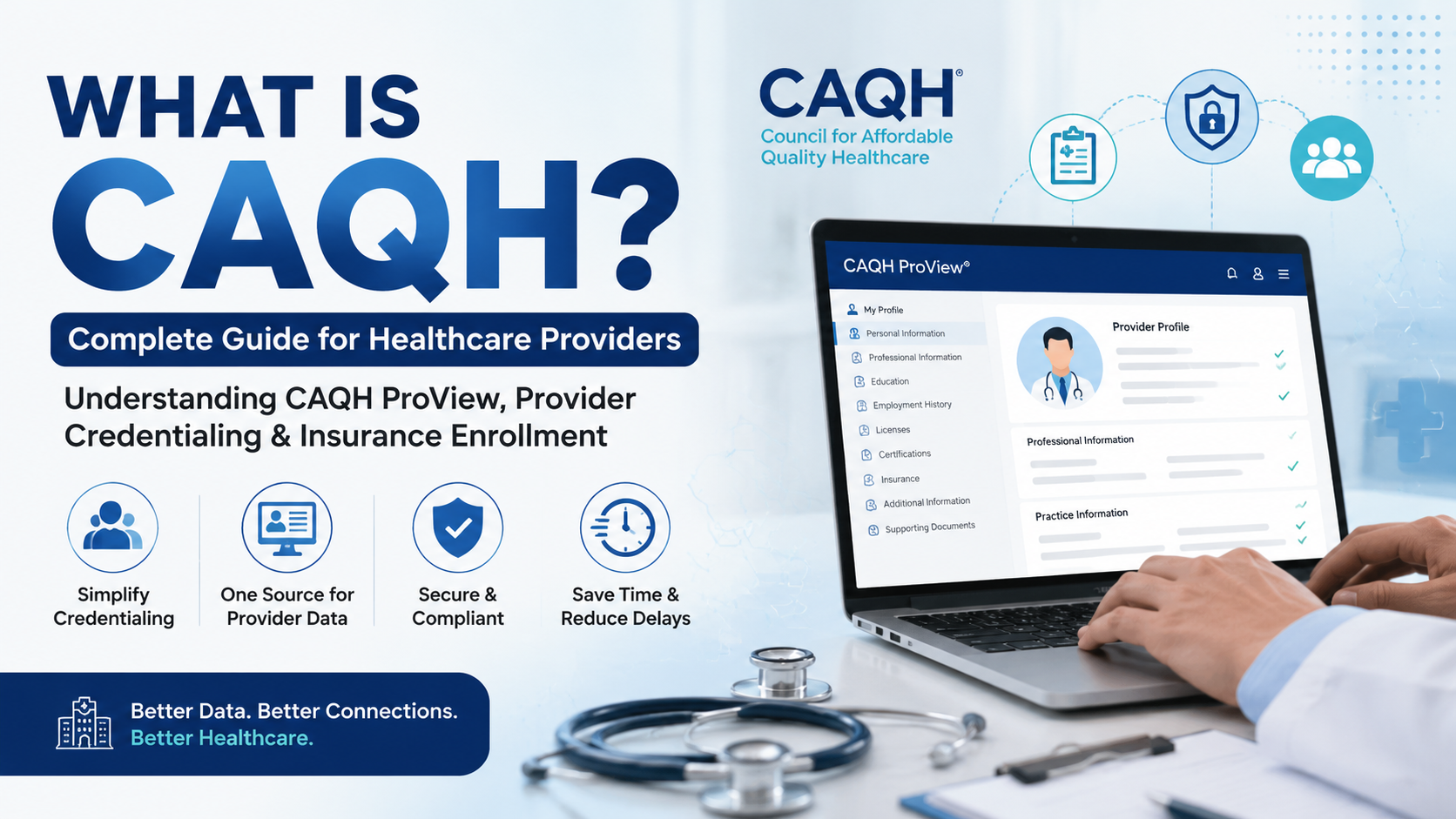
What Is CAQH? A Complete Guide to CAQH Credentialing and Provider Enrollment
Introduction: What Is CAQH?
CAQH is a healthcare organization that provides digital solutions to simplify provider credentialing, enrollment, and administrative data exchange between healthcare providers and insurance organizations. CAQH allows healthcare professionals to maintain a standardized online profile containing their professional and practice information, which insurance companies and healthcare organizations can use during credentialing processes.
For physicians and other healthcare providers, CAQH is an important part of the insurance enrollment ecosystem. A complete and accurate CAQH profile can help reduce administrative delays when providers apply to join insurance networks or participate in payer programs.
Many providers confuse CAQH with credentialing itself. However, CAQH does not credential healthcare providers. Instead, CAQH provides a centralized data platform that helps healthcare organizations collect and verify provider information during the credentialing process.
Understanding CAQH is essential for providers who want to:
- Join insurance networks
- Get approved by healthcare payers
- Maintain participation with insurance companies
- Reduce credentialing delays
- Keep professional information organized and accessible
What Does CAQH Stand For and What Does It Mean?
CAQH stands for the Council for Affordable Quality Healthcare. CAQH is a nonprofit healthcare organization created to improve healthcare administrative processes through technology and standardized information exchange.
The organization focuses on reducing unnecessary administrative work between healthcare providers, insurance companies, and other healthcare stakeholders.
Before systems like CAQH, providers often had to complete separate credentialing forms for each insurance company. This created:
- Duplicate paperwork
- Longer processing times
- Increased administrative costs
- Higher chances of inconsistent information
CAQH helped create a more efficient approach by allowing providers to maintain one centralized digital profile.
Why Was CAQH Created for Healthcare Providers?
CAQH was created to simplify healthcare administration by reducing repetitive paperwork and improving the accuracy of provider information used by insurance companies.
The healthcare industry involves many organizations that need the same provider information, including:
- Insurance companies
- Hospitals
- Medical groups
- Credentialing organizations
- Government healthcare programs
Without a centralized system, providers may need to submit similar information multiple times.
CAQH helps solve this problem by providing:
- A standardized provider database
- Electronic data collection
- Online provider verification
- Secure information sharing
Example:
A physician joining multiple insurance networks may need to provide:
- Medical license information
- Education history
- Work history
- Practice locations
- Malpractice coverage
Instead of submitting the same information repeatedly, the provider can maintain this information through a CAQH profile.
What Is CAQH ProView and How Does It Work?
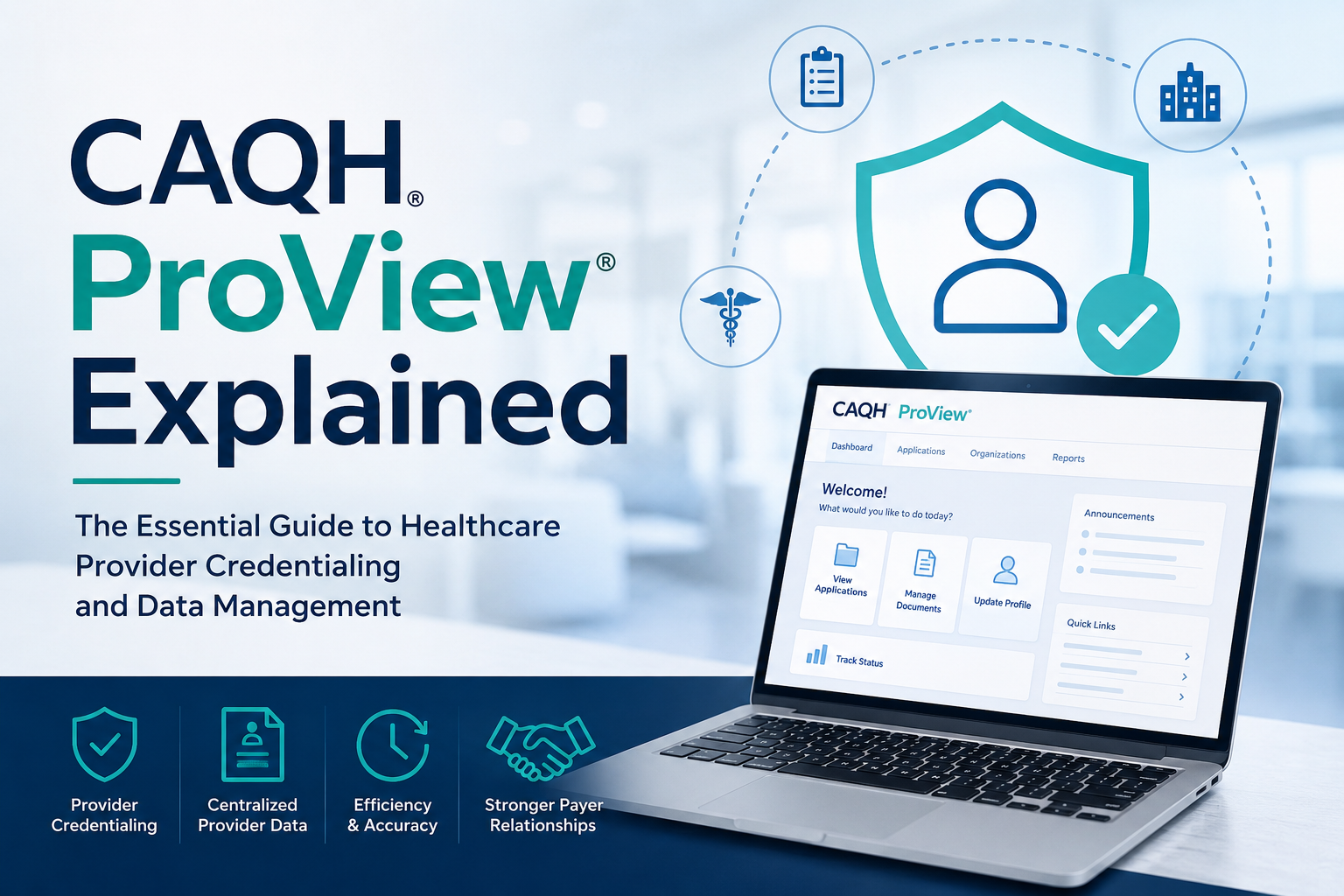
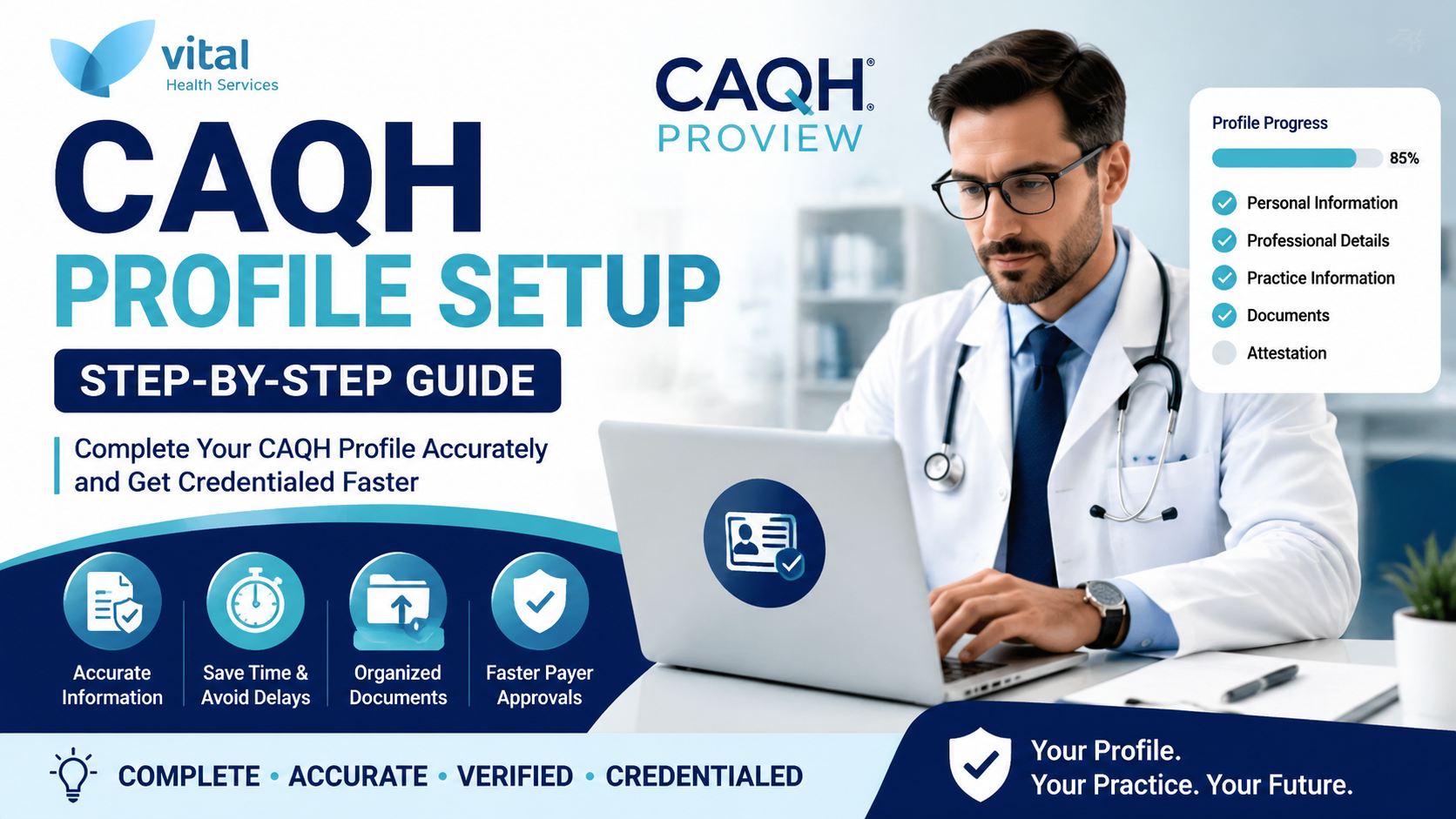
CAQH ProView is the online platform where healthcare providers create, complete, and maintain their professional credentialing information.
CAQH ProView replaced older paper-based credentialing methods by allowing providers to manage their information digitally.
The platform acts as a centralized provider data repository that authorized healthcare organizations can access during credentialing and enrollment activities.
What Information Is Included in a CAQH Profile?
A CAQH profile contains detailed information about a healthcare provider’s professional background, qualifications, and practice details.
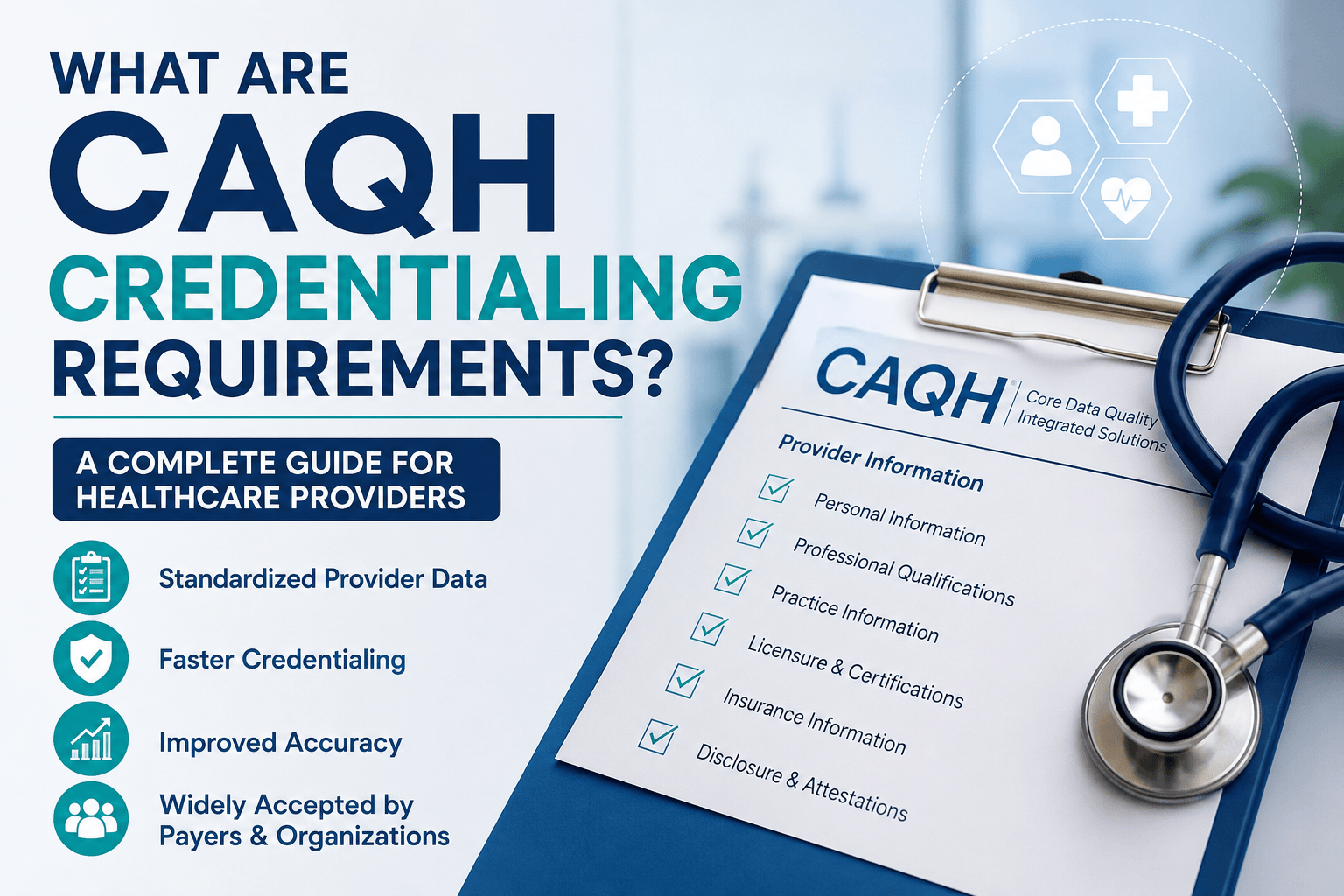
A complete CAQH profile usually includes:
| Information Category | Examples |
|---|---|
| Personal Information | Name, contact details, demographic information |
| Professional Identification | NPI number, license information |
| Education History | Medical school, residency, training programs |
| Work History | Previous employers and practice history |
| Practice Information | Locations, specialties, affiliations |
| Certifications | Board certifications and professional credentials |
| Malpractice Information | Insurance coverage and claims history |
| Hospital Affiliations | Healthcare facilities where provider has privileges |
| Supporting Documents | Licenses, certificates, insurance documents |
Why Is Each Section Important?
Professional License Information
Insurance companies verify that providers have active licenses and meet professional requirements.
Examples:
- State medical license
- Nursing license
- Dental license
- Professional certifications
Work History
Providers must provide accurate employment and practice history.
Missing information or unexplained gaps can delay credentialing reviews.
Malpractice Insurance Details
Healthcare payers often require proof that providers maintain appropriate professional liability coverage.
Practice Location Information
Insurance networks need accurate information about where providers deliver healthcare services.
Incorrect addresses can create:
- Enrollment delays
- Directory errors
- Patient access problems
Who Uses CAQH Provider Information?
CAQH information is primarily used by healthcare organizations involved in provider credentialing, enrollment, and verification.
Users may include:
Insurance Companies (Payers)
Insurance companies use CAQH data to review provider qualifications before allowing participation in their networks.
Examples include:
- Commercial health insurance plans
- Medicare-related organizations
- Medicaid-related organizations
Healthcare Organizations
Hospitals and medical groups may use CAQH information when:
- Recruiting providers
- Verifying credentials
- Managing provider relationships
Credentialing Specialists
Credentialing professionals use CAQH data to:
- Review provider information
- Identify missing documents
- Support payer enrollment applications
How Does CAQH Help With Healthcare Provider Credentialing?
CAQH helps healthcare provider credentialing by providing a standardized database where providers maintain information required for payer verification.
Credentialing is the process insurance companies use to verify that a healthcare provider is qualified to provide services to their members.
During credentialing, organizations typically review:
- Education
- Training
- Licenses
- Certifications
- Work history
- Professional liability history
- Practice information
CAQH makes this information easier to collect and review.
Is CAQH the Same as Provider Credentialing?
No, CAQH and provider credentialing are different. CAQH provides the information platform, while credentialing is the verification process performed by healthcare organizations.
The relationship works like this:
| CAQH | Provider Credentialing |
|---|---|
| Stores provider information | Reviews provider qualifications |
| Maintains digital profile | Verifies credentials |
| Collects standardized data | Determines network approval |
| Supports enrollment workflows | Approves participation |
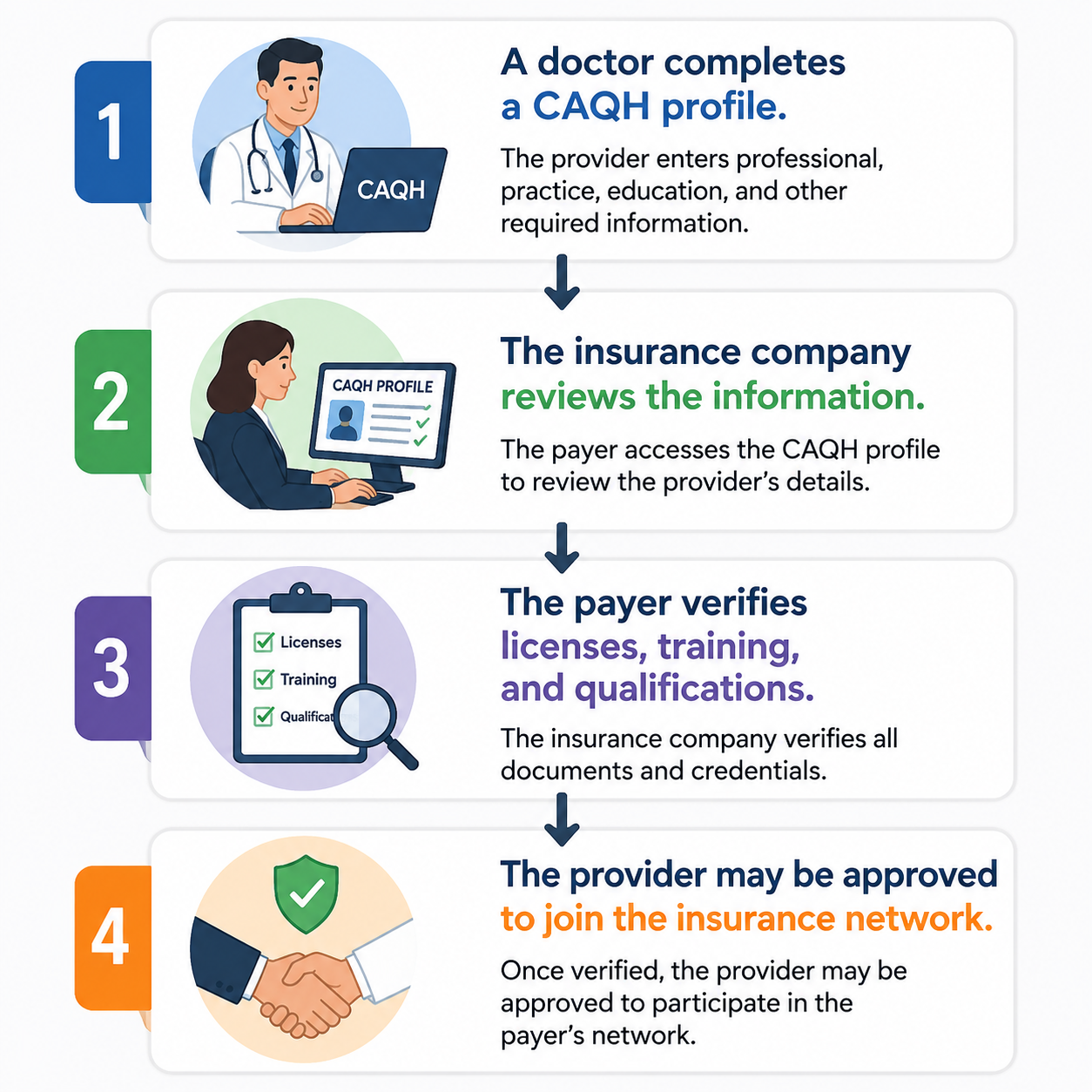
Simple Example:
Why Do Insurance Companies Use CAQH?
Insurance companies use CAQH because it provides a consistent and efficient way to access provider information needed for credentialing and enrollment.
Using a centralized provider database helps payers:
- Reduce administrative duplication
- Improve data accuracy
- Speed up verification processes
- Maintain updated provider records
For healthcare providers, this means fewer repetitive forms and a more organized credentialing experience.
Who Needs a CAQH Profile?
Healthcare providers who want to participate with many insurance networks commonly need a CAQH profile.
CAQH requirements vary by payer and healthcare specialty, but many providers maintain CAQH profiles because insurance companies frequently request access to this information.
Which Healthcare Providers Usually Need CAQH?
Common providers who may use CAQH include:
- Physicians (MDs and DOs)
- Nurse practitioners
- Physician assistants
- Dentists
- Mental health professionals
- Behavioral healthcare providers
- Allied healthcare professionals
Healthcare organizations may also manage CAQH information for providers working within their practices.
Why Do New Providers Need CAQH?
New healthcare providers often need CAQH when applying for insurance network participation because payers require professional credential information before approval.
For example, a new physician opening a practice may need:
- A completed CAQH profile
- Active licenses
- NPI information
- Professional documents
before beginning payer enrollment.
How Do Providers Create and Complete a CAQH Profile?
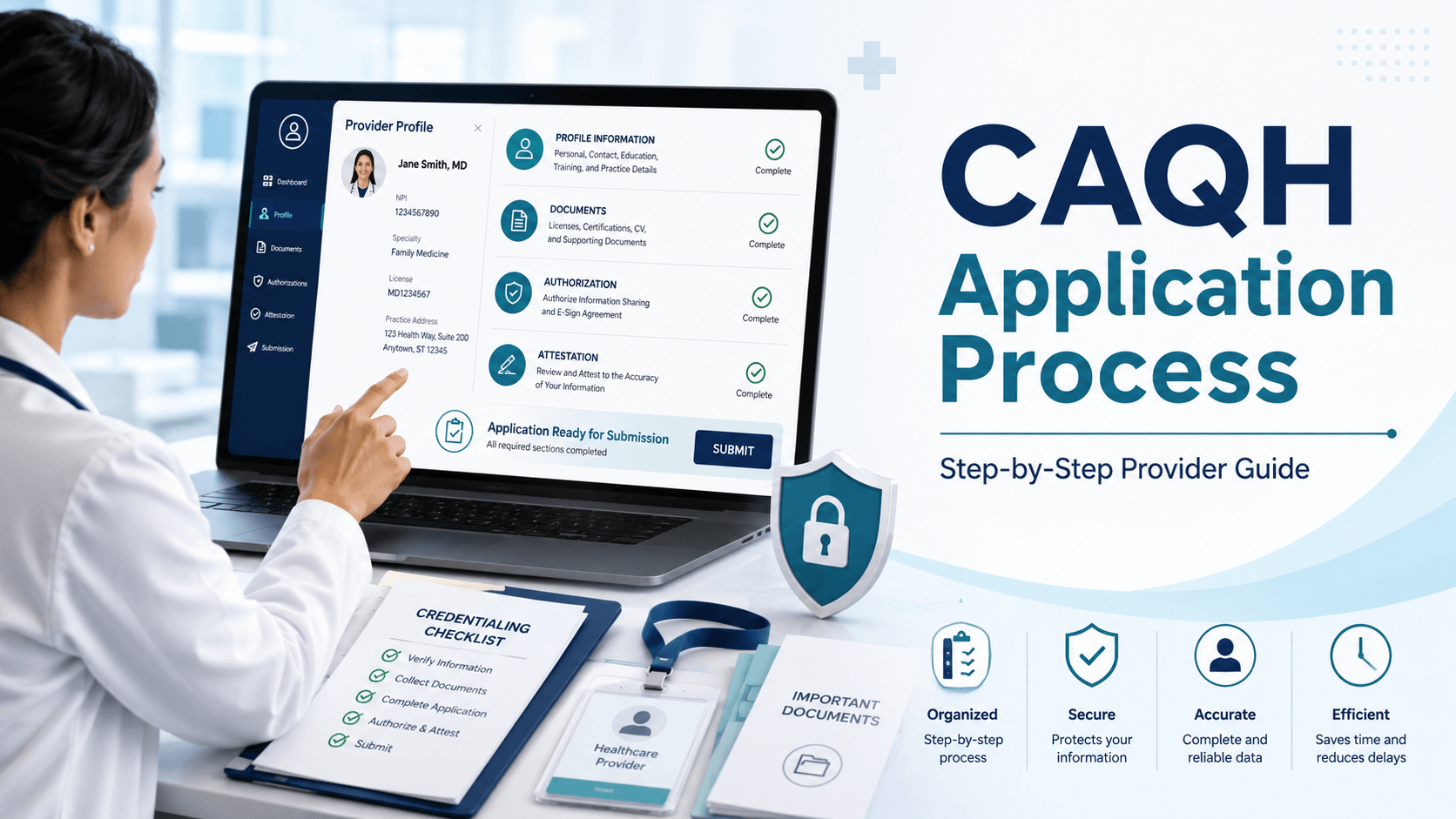
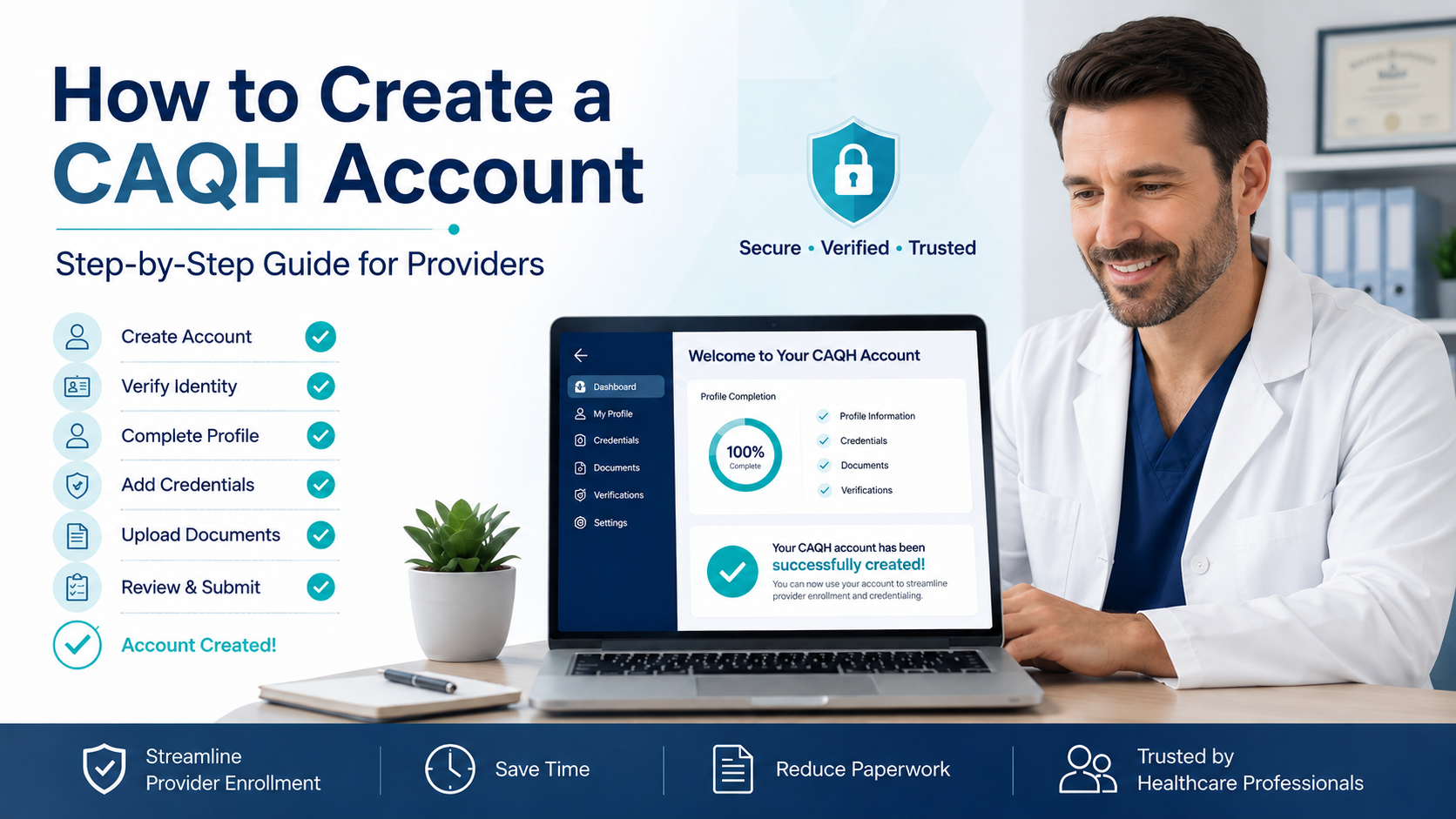
Providers create a CAQH profile by registering online, entering professional information, uploading required documents, and regularly confirming that their information remains accurate.
The general process includes:
Step 1: Register for CAQH Access
Providers create their account through the CAQH ProView system.
Step 2: Complete Provider Information
Providers enter details such as:
- Personal information
- Education
- Training
- Employment history
- Licenses
- Certifications
Step 3: Upload Supporting Documents
Documents may include:
- Medical licenses
- DEA certificates (when applicable)
- Professional liability insurance
- Board certification documents
Step 4: Review and Attest Information
Providers review their information and confirm that it is accurate.
Step 5: Maintain the Profile
Providers must regularly update information when changes occur.
Examples:
- New practice location
- New license
- Updated malpractice insurance
- New employment
What Are Common CAQH Mistakes That Delay Credentialing?
Common CAQH mistakes include incomplete profiles, outdated documents, incorrect provider information, and missing updates that prevent insurance companies from verifying a provider efficiently.
Although CAQH simplifies credentialing, the quality of the information inside the profile directly affects the credentialing process.
A provider with inaccurate or incomplete CAQH information may experience:
- Credentialing delays
- Insurance enrollment problems
- Requests for additional documentation
- Delayed reimbursement opportunities
Why Does Accurate CAQH Information Matter?
Accurate CAQH information matters because insurance companies rely on provider data to verify qualifications, practice details, and eligibility for network participation.
Even small errors can create problems.
Examples:
Incorrect License Information
If a license number or expiration date is incorrect, the payer may need additional verification before approval.
Missing Work History
Unexplained gaps in employment history can delay credentialing reviews because payers may need clarification.
Expired Documents
Examples:
- Expired malpractice insurance
- Expired professional licenses
- Outdated certifications
can prevent a profile from being considered complete.
Wrong Practice Information
Incorrect:
- Address
- Phone number
- Tax information
- Group affiliation
may create enrollment issues or inaccurate provider directories.
What Are the Most Common CAQH Errors Providers Should Avoid?
Healthcare providers should avoid these common CAQH mistakes:
1. Leaving Required Fields Incomplete
A partially completed profile may not provide enough information for payer verification.
2. Forgetting Regular Updates
Providers should update CAQH whenever important information changes.
Examples:
- Moving to a new clinic
- Changing employers
- Renewing a license
- Updating insurance coverage
3. Uploading Incorrect Documents
Documents should:
- Match entered information
- Be readable
- Be current
- Include complete pages
4. Ignoring Attestation Requirements
Providers usually need to confirm that their CAQH information remains accurate.
Failure to complete required attestations can cause profile issues.
CAQH vs Credentialing: What Is the Difference?
CAQH is a provider information management system, while credentialing is the process of verifying a healthcare provider’s qualifications for insurance participation.
Many people use these terms interchangeably, but they represent different parts of the healthcare enrollment process.
| Category | CAQH | Credentialing |
|---|---|---|
| Purpose | Collect and maintain provider data | Verify provider qualifications |
| Main Function | Information management | Approval process |
| Used By | Providers, payers, healthcare organizations | Insurance companies and credentialing teams |
| Outcome | Complete provider profile | Provider approval for network participation |
| Responsibility | Provider maintains information | Payer reviews and decides approval |
How Do CAQH and Credentialing Work Together?
The relationship is simple:
CAQH provides the information → Credentialing verifies the information → Insurance payer makes enrollment decisions.
Example:
- A physician creates a CAQH profile.
- The physician applies to join an insurance network.
- The payer accesses CAQH information.
- The payer verifies credentials.
- The provider is approved or additional information is requested.
CAQH vs NPI: Are They the Same Thing?
No, CAQH and NPI are different healthcare identifiers and systems. CAQH stores provider credentialing information, while an NPI identifies healthcare providers for administrative transactions.
The two systems work together but serve different purposes.
| Feature | CAQH | NPI |
|---|---|---|
| Full Name | Council for Affordable Quality Healthcare | National Provider Identifier |
| Purpose | Provider credentialing data management | Provider identification |
| Issued By | CAQH organization | National Plan and Provider Enumeration System (NPPES) |
| Used For | Credentialing and enrollment support | Healthcare billing and transactions |
| Contains | Professional background and documents | Unique provider identification number |
Why Do Providers Need Both CAQH and NPI?
Healthcare providers often need both because they solve different problems.
NPI Answers:
“Who is this healthcare provider?”
CAQH Answers:
“What are this provider’s qualifications, professional details, and credentialing information?”
What Are the Benefits of Maintaining an Updated CAQH Profile?
Maintaining an updated CAQH profile helps providers reduce administrative delays, support faster credentialing workflows, and keep their professional information ready for payer review.
Important benefits include:
1. Simplifies Insurance Enrollment
An updated profile allows payers to access necessary information more efficiently.
2. Reduces Repetitive Paperwork
Providers avoid repeatedly submitting the same credentialing details to different organizations.
3. Improves Data Accuracy
A centralized profile helps reduce inconsistent information across healthcare organizations.
4. Supports Faster Credential Verification
Complete information allows credentialing teams to spend less time requesting missing details.
5. Helps Maintain Insurance Network Participation
Many payers require providers to keep credentialing information current.
How Long Does CAQH Credentialing Take?
The time required for CAQH-related credentialing depends on the completeness of the provider profile, payer requirements, verification processes, and whether additional documentation is needed.
CAQH itself is not the organization that approves credentialing.
The overall timeline depends on:
- Provider specialty
- Insurance company requirements
- Accuracy of submitted information
- Document verification
- State regulations
- Payer workload
Factors That Can Slow Down Credentialing
Credentialing delays often happen because of:
- Missing documents
- Incorrect information
- License verification issues
- Unexplained employment gaps
- Slow responses to payer requests
What Happens If CAQH Information Expires or Is Not Updated?
If CAQH information becomes outdated, providers may experience delays because insurance companies may not have current information needed for verification.
Examples of information that may need updates:
- License renewal
- Practice address changes
- Insurance coverage changes
- Employment changes
- New certifications
Keeping information current helps maintain a reliable provider record.
What Is the Role of CAQH in Medical Credentialing Services?
CAQH plays an important role in medical credentialing services because credentialing specialists often help providers complete, review, and maintain accurate CAQH profiles.
Professional credentialing services may assist with:
- CAQH profile creation
- Data accuracy review
- Document management
- Profile updates
- Payer enrollment support
This is especially helpful for:
- New practice owners
- Busy physicians
- Healthcare groups managing multiple providers
Key Takeaway: Why Does CAQH Matter for Healthcare Providers?
CAQH matters because it creates a standardized way for healthcare providers to manage credentialing information used by insurance organizations and healthcare networks.
The most important points are:
- CAQH is not credentialing itself.
- CAQH provides a centralized provider information platform.
- CAQH ProView stores important professional and practice information.
- Accurate CAQH information helps reduce credentialing delays.
- Healthcare providers should regularly review and update their profiles.
A well-maintained CAQH profile helps create a smoother path toward insurance participation and healthcare network enrollment.
Frequently Asked Questions About CAQH
What does CAQH stand for?
CAQH stands for the Council for Affordable Quality Healthcare. It is a healthcare organization that develops solutions to simplify administrative processes such as provider credentialing and enrollment.
Is CAQH mandatory for physicians?
CAQH is not universally required by law for every physician, but many insurance companies require or use CAQH information during provider credentialing and enrollment.
Is CAQH the same as credentialing?
No. CAQH stores provider information, while credentialing is the process insurance organizations use to verify provider qualifications.
What is CAQH ProView?
CAQH ProView is the online system where healthcare providers create and maintain their credentialing information profile.
How often should providers update CAQH?
Providers should update CAQH whenever important information changes and complete required profile attestations to keep information accurate.
What documents are needed for CAQH?
Common CAQH documents include professional licenses, certifications, malpractice insurance information, education history, and other provider credential documents.
Why is my CAQH profile important?
A complete CAQH profile helps healthcare providers efficiently share credentialing information with insurance companies and healthcare organizations.
Conclusion
CAQH has become an important part of modern healthcare administration by helping providers and insurance organizations manage credentialing information more efficiently.
While CAQH does not approve providers or replace the credentialing process, it provides the digital foundation that makes credential verification easier.
For healthcare providers, maintaining an accurate CAQH profile is one of the most important steps toward smoother insurance enrollment, fewer administrative delays, and better participation opportunities with healthcare networks.