How to Get Credentialed with Texas Medicaid (Step-by-Step Guide)
Getting credentialed with Texas Medicaid means enrolling as an approved provider so you can legally bill Medicaid for services. The Texas Medicaid & Healthcare Partnership handles the process on behalf of the Texas Health and Human Services Commission.
In simple terms:
- Credentialing = verification of your qualifications
- Enrollment = official approval to bill Medicaid
Most providers must complete both before they can see Medicaid patients and get paid.
What does “Texas Medicaid credentialing” actually mean?
Texas Medicaid credentialing means verifying a provider’s identity, license, qualifications, and compliance before allowing participation in Medicaid.
It includes:
- License verification
- Background checks (required under federal law)
- Ownership disclosures
- Practice location validation
Credentialing is part of provider enrollment, not a separate process in Texas Medicaid fee-for-service.

Who is eligible to enroll as a Texas Medicaid provider?
Any qualified healthcare provider who meets state and federal requirements can enroll.
Common eligible providers:
- Physicians (MD, DO)
- Nurse practitioners and physician assistants
- Therapists (PT, OT, SLP)
- Behavioral health providers
- Clinics and group practices
- Hospitals and long-term care facilities
Eligibility depends on:
- Active professional license in Texas
- Scope of services covered by Medicaid
- Compliance with Medicaid rules
What are the prerequisites for applying for Texas Medicaid?
You must complete key setup steps before starting your application.
Do you need an NPI before enrollment?
Yes. You must have a valid National Provider Identifier (NPI) before applying.
- Issued through the National Plan and Provider Enumeration System (NPPES)
- Required for all healthcare billing in the U.S.
- Must match your application details exactly
Do you need Medicare enrollment first?
Sometimes. Certain provider types must enroll in Medicare first.
Examples:
- Physicians
- Durable medical equipment suppliers
This requirement exists because Medicaid cross-checks federal enrollment data.
How do you apply through the Texas Medicaid PEMS portal?
You apply online using the Provider Enrollment and Management System (PEMS).
What is PEMS, and where do you access it?
PEMS is the official enrollment portal managed by Texas Medicaid & Healthcare Partnership.
It allows you to:
- Submit applications
- Upload documents
- Track enrollment status
- Manage revalidation
You can access it through the TMHP website.
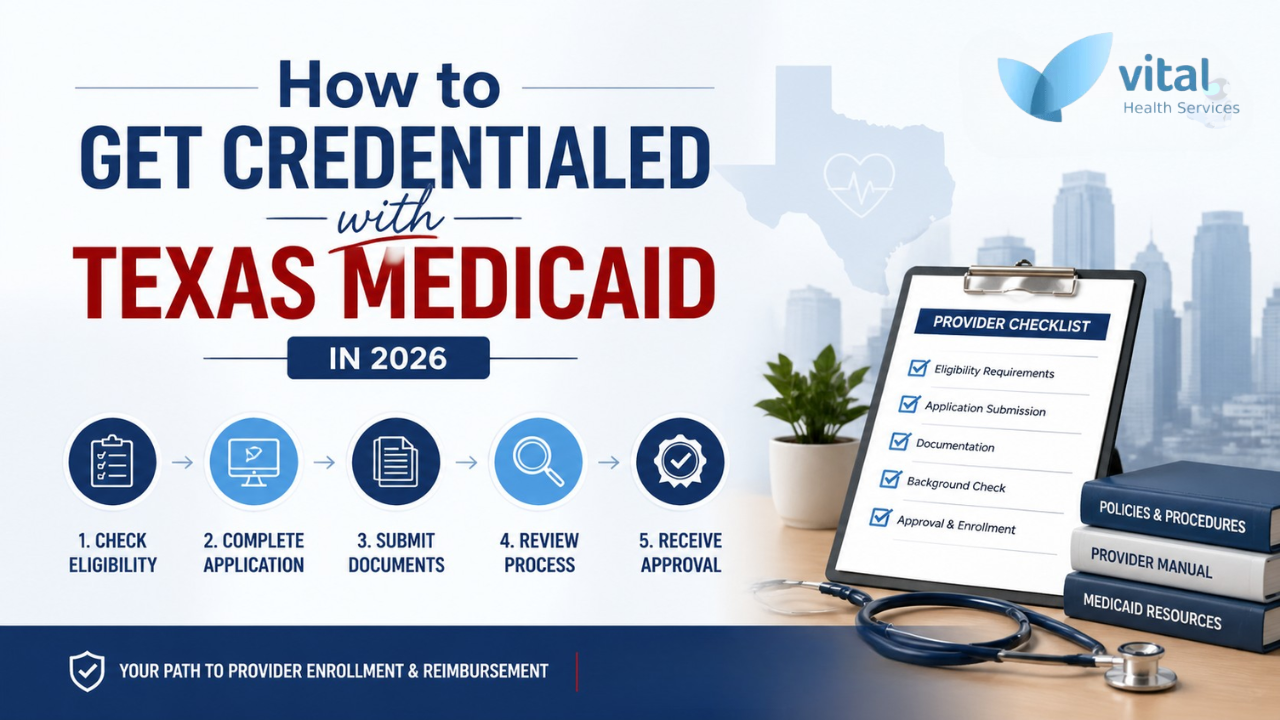
What are the step-by-step enrollment steps?
Follow this exact process:
- Create a PEMS account
- Start a new enrollment application
- Enter provider details
- NPI
- Tax ID (TIN/EIN or SSN)
- Taxonomy code
- Add practice location(s)
- Disclose ownership and controlling interests
- Upload required documents
- Submit application
- Respond to any requests for additional information
After submission:
- TMHP reviews your application
- Screening and verification are performed
- You receive approval or a request for corrections
What documents are required for Texas Medicaid credentialing?
You must submit documents that verify your identity, licensure, and business structure.
Typical requirements:
- Active Texas professional license
- NPI confirmation
- IRS tax documentation (W-9)
- Proof of practice address
- Ownership disclosure forms
- Board certification (if applicable)
- Work history (for some providers)
For groups or clinics:
- Organizational documents (LLC, corporation)
- Managing employees information
What is Medicaid provider screening and why is it required?
Provider screening is a mandatory background check required under the Affordable Care Act.
It ensures that:
- Providers are legitimate
- Fraud risk is minimized
- Medicaid funds are protected
Screening levels may include:
- License verification
- Database checks (federal exclusions)
- Site visits (for high-risk providers)
- Fingerprinting (for certain categories)
How long does Texas Medicaid enrollment take?
Most applications take 30 to 90 days, depending on completeness and provider type.
Factors that affect the timeline:
- Missing documents
- Errors in application
- Screening level (high-risk takes longer)
- Response time to TMHP requests
Delays are common if:
- Information doesn’t match NPI records
- Ownership disclosures are incomplete
What happens after you are approved?
Once approved, you receive a Texas Provider Identifier (TPI).
You can then:
- Bill Medicaid for services
- Enroll in managed care plans
- Access provider portals for claims
Important: Approval in Medicaid fee-for-service does NOT automatically enroll you in managed care.
Do you also need Medicaid managed care (MCO) credentialing?
Yes. In most cases, you must separately credential with Medicaid managed care organizations (MCOs).
Examples of MCOs in Texas:
- Amerigroup Texas
- Superior HealthPlan
- UnitedHealthcare Community Plan
Key difference:
| Process | Purpose |
|---|---|
| Medicaid enrollment (TMHP) | Allows billing in fee-for-service |
| MCO credentialing | Allows participation in managed care networks |
Most Texas Medicaid patients are in managed care, so MCO credentialing is critical.
What is Texas Medicaid revalidation and reenrollment?
Revalidation is a required process where providers must periodically update and confirm their enrollment information.
- Typically required every 3–5 years
- Managed through PEMS
- Failure to revalidate can lead to termination
You must:
- Update licenses
- Confirm ownership details
- Re-submit documentation
What are common mistakes to avoid during enrollment?
Avoid these issues to prevent delays:
- Submitting incorrect NPI information
- Missing ownership disclosures
- Uploading expired licenses
- Incomplete practice location details
- Ignoring TMHP follow-up requests
Best practice: Double-check all data before submission.
Key Takeaways
- Texas Medicaid credentialing is part of the provider enrollment process
- Applications are submitted through PEMS (TMHP portal)
- You must have an NPI and a valid license first
- Approval typically takes 30–90 days
- You also need MCO credentialing separately
- Revalidation is required every few years
FAQs
How do I apply for Texas Medicaid provider enrollment?
You apply online through the PEMS portal managed by TMHP by creating an account and submitting your application with required documents.
Is credentialing the same as enrollment in Texas Medicaid?
No. Credentialing verifies your qualifications, while enrollment gives you approval to bill Medicaid.
How long does it take to get approved?
Most providers are approved within 30 to 90 days, depending on application completeness and screening requirements.
Do I need an NPI before applying?
Yes. An active NPI is required before you can submit a Medicaid application.
What is a TPI in Texas Medicaid?
A Texas Provider Identifier (TPI) is issued after approval and is used for Medicaid billing.
Do I need to enroll in Medicaid managed care plans?
Yes. You must separately credential with MCOs to treat most Medicaid patients in Texas.
What happens if I don’t revalidate?
Your Medicaid enrollment may be terminated, and you will not be able to bill for services.