What Are the Latest Treatment Updates for Busy Primary Care Doctors?
Primary care is evolving faster than ever. New medications, updated guidelines, and digital tools are changing how doctors diagnose, treat, and monitor patients.
The short answer: Modern primary care is shifting toward earlier intervention, personalized treatment, and multi-condition management using newer drug classes and smarter monitoring tools.
This matters because most chronic diseases are managed in primary care, and even small updates can significantly improve outcomes.
Let’s break down the most important updates you actually need to know.
Table of Contents
ToggleWhat are the most important recent updates in primary care treatment guidelines?
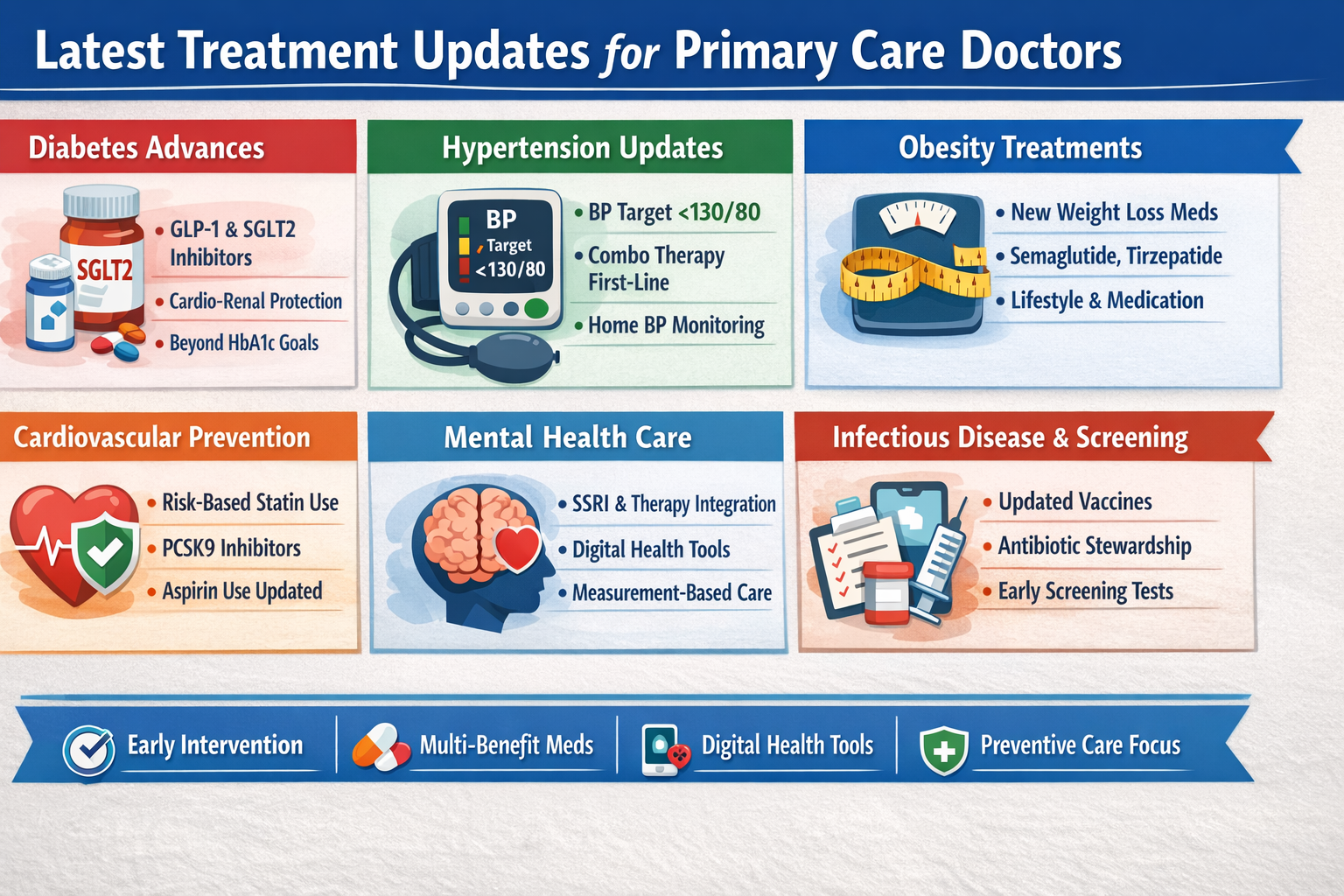
The most important updates focus on preventive care, early intervention, and multi-benefit medications.
Recent trends include:
- Treat earlier rather than waiting for disease progression
- Use medications that improve multiple outcomes (e.g., heart + kidney + glucose)
- Focus on long-term risk reduction, not just symptom control
Key changes from major guidelines (WHO, CDC, ADA, ACC):
- Lower thresholds for treatment in high-risk patients
- Increased use of combination therapy
- Greater emphasis on lifestyle + pharmacology together
👉 Example: Diabetes drugs are now prescribed for heart and kidney protection, not just glucose control.
How has diabetes treatment changed in recent years?
Diabetes treatment now prioritizes cardiovascular and kidney protection alongside blood sugar control.
The biggest shift:
HbA1c is no longer the only goal—organ protection is equally important.
According to the American Diabetes Association (ADA 2024):
- Use SGLT2 inhibitors or GLP-1 receptor agonists early in high-risk patients
- Prioritize medications that reduce heart failure and kidney disease risk
What role do GLP-1 receptor agonists and SGLT2 inhibitors play now?
These drug classes are now first-line or early add-on therapies in many patients.
GLP-1 receptor agonists (e.g., semaglutide):
- Lower blood sugar
- Promote weight loss
- Reduce cardiovascular risk
SGLT2 inhibitors (e.g., empagliflozin):
- Protect kidneys
- Reduce heart failure hospitalization
- Lower glucose modestly
📊 Evidence:
Large trials like EMPA-REG and LEADER showed a significant reduction in cardiovascular events.
👉 Practical takeaway:
Use these drugs earlier, especially in patients with:
- Cardiovascular disease
- Chronic kidney disease
- Obesity
What are the latest hypertension management recommendations?
Hypertension management now emphasizes individualized targets and combination therapy.
According to ACC/AHA guidelines:
- Target BP: generally <130/80 mmHg
- Start with two-drug combinations in many patients
Key updates:
- Use home BP monitoring
- Treat based on total cardiovascular risk, not just numbers
- Prioritize ACE inhibitors, ARBs, calcium channel blockers, and thiazides
👉 Shift:
From “stepwise escalation” → to early aggressive control
What are the newest approaches to cardiovascular disease prevention?
Modern prevention focuses on risk-based treatment, not just cholesterol numbers.
Key updates:
- Statins based on risk score, not just LDL levels
- Use of PCSK9 inhibitors in high-risk patients
- Aspirin use is now more restricted due to bleeding risk
📊 According to major guidelines:
- Statins reduce major cardiovascular events by ~25% per mmol/L LDL reduction
👉 Practical change:
- Focus on total risk (age, diabetes, BP, smoking)
- Treat aggressively in high-risk groups
How is obesity treatment evolving in primary care?
Obesity is now treated as a chronic disease, not just a lifestyle issue.
Key shift:
Medication is now standard care, not a last resort.
Which new weight-loss medications are changing practice?
New drugs like semaglutide and tirzepatide are transforming obesity treatment.
These medications:
- Reduce appetite
- Slow gastric emptying
- Improve insulin sensitivity
📊 Research shows:
- Semaglutide can lead to ~15% weight loss
- Tirzepatide can achieve up to 20% weight loss (NEJM trials)
👉 Why this matters:
- Weight loss improves diabetes, BP, and cardiovascular risk simultaneously
What are the latest mental health treatment updates for primary care?
Primary care now plays a central role in mental health management.
Key updates:
- SSRIs remain first-line
- Increased use of measurement-based care (PHQ-9, GAD-7)
- Integration of behavioral therapy
New trends:
- Digital mental health tools
- Collaborative care models
👉 Important:
- Early treatment reduces long-term disability
What are the current infectious disease and vaccination updates?
Infectious disease management emphasizes prevention and antimicrobial stewardship.
Key updates:
- Expanded adult vaccination schedules (CDC)
- Updated COVID-19 boosters
- Focus on reducing unnecessary antibiotics
👉 Example:
- Avoid antibiotics for viral infections
- Use narrow-spectrum agents when possible
How has chronic kidney disease treatment improved recently?
CKD treatment now focuses on slowing progression early.
Major updates:
- Use SGLT2 inhibitors in CKD—even without diabetes
- Better BP control
- Use ACE inhibitors/ARBs for kidney protection
📊 Trials show:
- SGLT2 inhibitors reduce kidney disease progression significantly
👉 Key shift:
- Treat earlier, not after a severe decline
What are the newest updates in respiratory disease management?
Respiratory care now focuses on personalized therapy and prevention.
Key updates:
Asthma:
- Use inhaled corticosteroids early
- Avoid SABA-only treatment
COPD:
- Dual bronchodilators preferred
- Tailor therapy to symptoms and exacerbation risk
👉 Trend:
- Move away from one-size-fits-all treatment
How are digital health tools and AI changing primary care treatment?
Digital tools are making care more efficient and data-driven.
Key innovations:
- Remote patient monitoring
- AI-assisted diagnosis
- Telemedicine follow-ups
Benefits:
- Better chronic disease tracking
- Reduced clinic burden
- Faster decision-making
👉 Example:
- Continuous glucose monitors improve diabetes control
What are the most important screening and preventive care updates?
Screening now focuses on earlier detection and risk-based strategies.
Recent updates (USPSTF):
- Earlier diabetes screening
- Lung cancer screening in smokers
- Expanded lipid screening
👉 Key principle:
- Detect disease before complications develop
What common mistakes should doctors avoid with new treatment updates?
Common mistakes include:
- Waiting too long to intensify treatment
- Ignoring newer medications
- Treating numbers instead of overall risk
- Overusing antibiotics
- Not addressing lifestyle factors
👉 Biggest mistake:
Not adapting to updated guidelines
What are the key takeaways for busy primary care doctors?
- Treat earlier and more aggressively
- Use multi-benefit medications
- Focus on long-term outcomes, not just symptoms
- Integrate digital tools
- Combine lifestyle + medication
Key Takeaway
Modern primary care is shifting toward early, personalized, multi-system treatment using newer medications and smarter monitoring tools to prevent complications before they occur.
FAQ Section
What is the biggest recent change in primary care treatment?
The biggest change is the shift toward early intervention and multi-benefit medications that protect the heart, kidneys, and metabolism.
Are new diabetes drugs better than older ones?
Yes, newer drugs like GLP-1 and SGLT2 inhibitors provide additional cardiovascular and kidney benefits, not just glucose control.
Should obesity always be treated with medication now?
Not always, but medications are now recommended for many patients, especially with comorbidities.
What is the current BP target for most patients?
Most guidelines recommend less than 130/80 mmHg for high-risk individuals.
How is AI used in primary care today?
AI helps with diagnosis support, risk prediction, and remote monitoring.
Are antibiotics still overused in primary care?
Yes, and reducing unnecessary prescriptions is a major focus of current guidelines.
What is the most important preventive strategy?
Early screening and risk-based treatment remain the most effective approaches.
Sources:
- ADA Standards of Care in Diabetes
- Standards of Care in Diabetes—2026, Diabetes Care
- KDIGO 2024 Clinical Practice Guideline for CKD (PDF)
- KDIGO CKD Evaluation and Management Guideline Page
- PubMed: KDIGO 2024 Clinical Practice Guideline for CKD
- CDC Adult Immunization Schedule by Age
- CDC Recommended Adult Immunization Schedule (PDF)
- USPSTF: Prediabetes and Type 2 Diabetes Screening
- CDC: Expanded Diabetes Screening Eligibility