Drug-Resistant Shigella Is Rising in the U.S. — Here’s What You Should Know
Federal health officials are raising concerns over a growing wave of drug-resistant Shigella — a bacterium that causes diarrhea and is now becoming harder to treat.
Table of Contents
ToggleAccording to the Centers for Disease Control and Prevention, a highly resistant form known as extensively drug-resistant (XDR) Shigella is emerging as a serious public health threat in the United States, with cases increasing in several states, including Michigan.
Why This Infection Is Getting More Attention
Shigella isn’t new. It’s long been a common cause of gastrointestinal illness.
What’s changed is how well we can treat it.
The CDC reports that since 2015, a growing number of infections are caused by strains resistant to multiple antibiotics, including:
- Ampicillin
- Azithromycin
- Ceftriaxone
- Ciprofloxacin
- Trimethoprim-sulfamethoxazole
In simple terms, these strains are resistant to nearly all standard treatments — and currently, there is no federally approved drug specifically for XDR Shigella.
A Rapid Rise in Resistant Cases
The numbers highlight how quickly this issue is evolving:
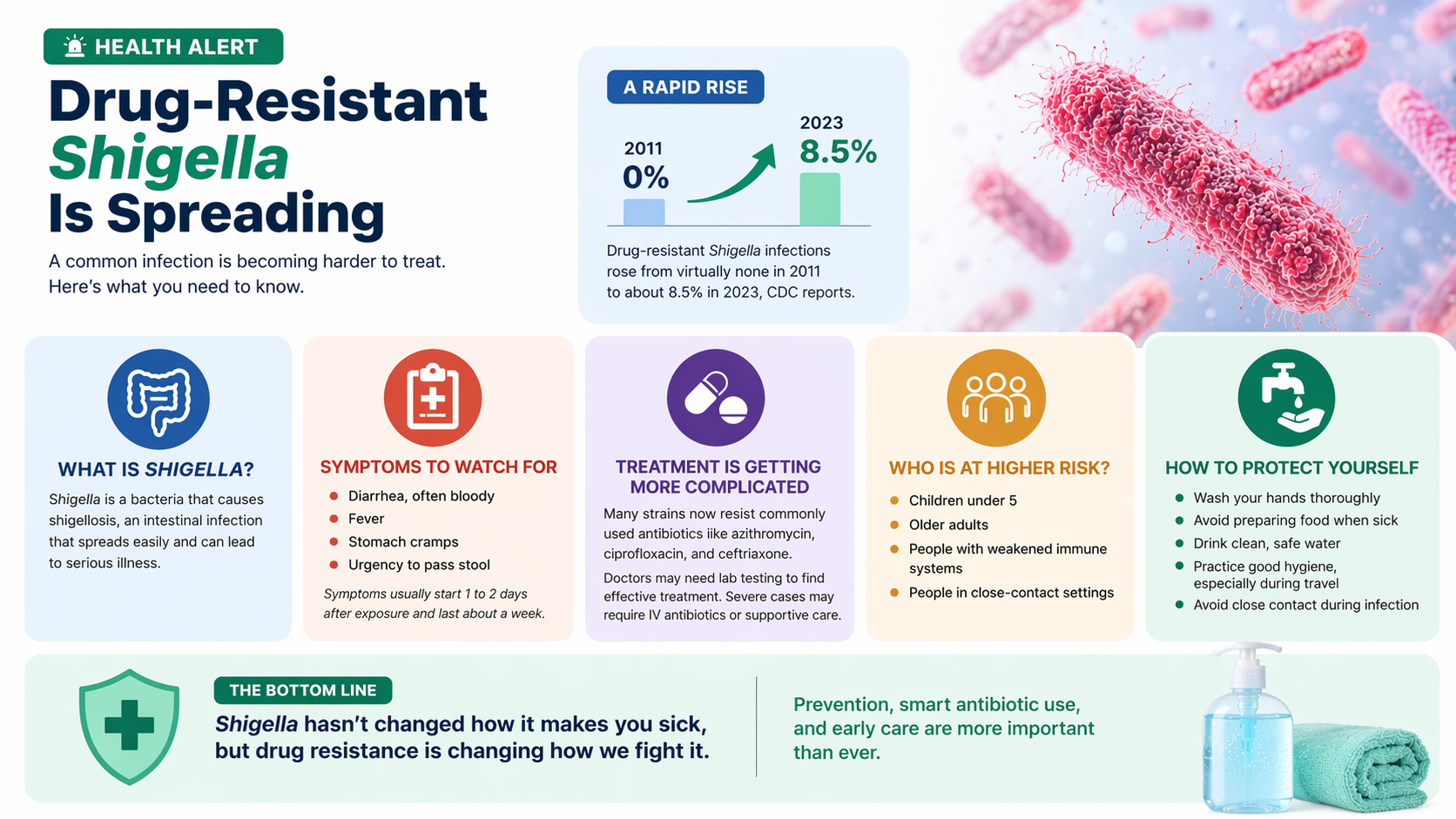
- Drug-resistant cases increased from 0% in 2011 to 8.5% in 2023
- The XDR strain was first identified in 2016
- Experts believe current data may undercount actual cases
This trend signals a shift from a manageable infection to one that requires greater clinical caution.
What Is Shigella?
Shigella is a bacterium that causes shigellosis, an intestinal infection.
It spreads easily through:
- Contact with an infected person
- Contaminated food or water
- Sexual activity involving oral–fecal contact
Because it takes only a small number of bacteria to cause illness, it is highly contagious.
The Cleveland Clinic also refers to shigellosis as bacillary dysentery, a more severe form of diarrheal illness.
Symptoms to Watch For
Symptoms usually appear within 1–2 days and may include:
- Diarrhea (often bloody and lasting more than 3 days)
- Fever
- Stomach pain
- A persistent urge to pass stool, even when the bowels are empty
While many cases resolve on their own, some can become severe or prolonged, especially with resistant strains.
Who Is Most at Risk?
Historically, Shigella infections were most common in children.
However, recent CDC data shows a shift:
- Between 2016 and 2023, many XDR cases occurred in adult men, particularly non-Hispanic White men
- About one-third of patients required hospitalization
Globally, Shigella remains a major concern — causing up to 40,000 deaths annually, according to the National Library of Medicine.
What’s Happening in Michigan?
Michigan is already seeing cases this year.
The Michigan Disease Surveillance System reported:
- 51 suspected or investigated cases of shigellosis in 2026
It’s not yet clear how many of these involve the drug-resistant strain, but health officials are monitoring the situation closely.
How Does It Spread?
Shigella spreads through what’s known as the fecal–oral route, meaning bacteria from stool enters the mouth.
Common transmission pathways include:
- Poor hand hygiene
- Contaminated food or water
- Sexual contact
- Exposure during diaper changing or caregiving
Because it spreads so easily, outbreaks can occur quickly in communities.
How to Protect Yourself
Health officials recommend simple but effective prevention steps:
- Wash your hands thoroughly with soap and water
- Be cautious when changing diapers
- Avoid swallowing water while swimming
- Follow safe food and water practices, especially when traveling
- Avoid sexual contact for at least two weeks after symptoms end if diagnosed
What About Treatment?
For mild cases, recovery often happens at home with supportive care.
The Cleveland Clinic advises:
- Drink plenty of fluids to prevent dehydration
- Consult a doctor before using anti-diarrheal medications, as they may prolong illness
In more severe cases, doctors may prescribe antibiotics such as ciprofloxacin or azithromycin — but these are increasingly less effective against resistant strains.
The CDC also notes:
- Some XDR strains show resistance to additional drugs like chloramphenicol
- However, no resistance has been identified to meropenem or fosfomycin so far
The Bottom Line
Drug-resistant Shigella is transforming a once routine infection into a more complex and harder-to-treat disease.
With limited treatment options and rising case numbers, experts emphasize:
- Early recognition
- Good hygiene practices
- Responsible antibiotic use
As health officials continue to track its spread, one thing is clear: preventing infection is now more important
References
- Centers for Disease Control and Prevention (CDC). Health Alert: Increase in Extensively Drug-Resistant (XDR) Shigella Infections in the United States. Available at: https://www.cdc.gov/han/2023/han00486.html
- Centers for Disease Control and Prevention (CDC). Shigella (Shigellosis) – General Information. Available at: https://www.cdc.gov/shigella/
- Michigan Department of Health and Human Services (MDHHS). Shigella Infection Information and Public Health Updates. Available at: https://www.michigan.gov/mdhhs
- NBC Chicago. Cases of Drug-Resistant Shigella Infections Rising in U.S., CDC Warns. Available at: https://www.nbcchicago.com/news/local/cases-of-drug-resistant-shigella-infections-rising-in-u-s-cdc-warns/
- People Magazine. Drug-Resistant Shigella Infection Spreading in the U.S. Available at: https://people.com/diarrhea-inducing-infection-resistant-to-antibiotics-is-spreading-in-the-us-
- New York Post. Cases of Drug-Resistant Diarrhea Superbug on the Rise in U.S. Available at: https://nypost.com/2026/04/15/health/cases-of-drug-resistant-diarrhea-superbug-on-the-rise-in-us/
- Detroit Free Press. Drug-Resistant Shigella Spreading, CDC and MDHHS Say. Available at: https://www.freep.com/story/news/health/2026/04/17/drug-resistant-shigella-spreading-cdc-mdhhs/89639440007/