CMS’s New Medicaid Plan Could Be a Game-Changer for Kids’ Healthcare
Quick Take: Why This Matters
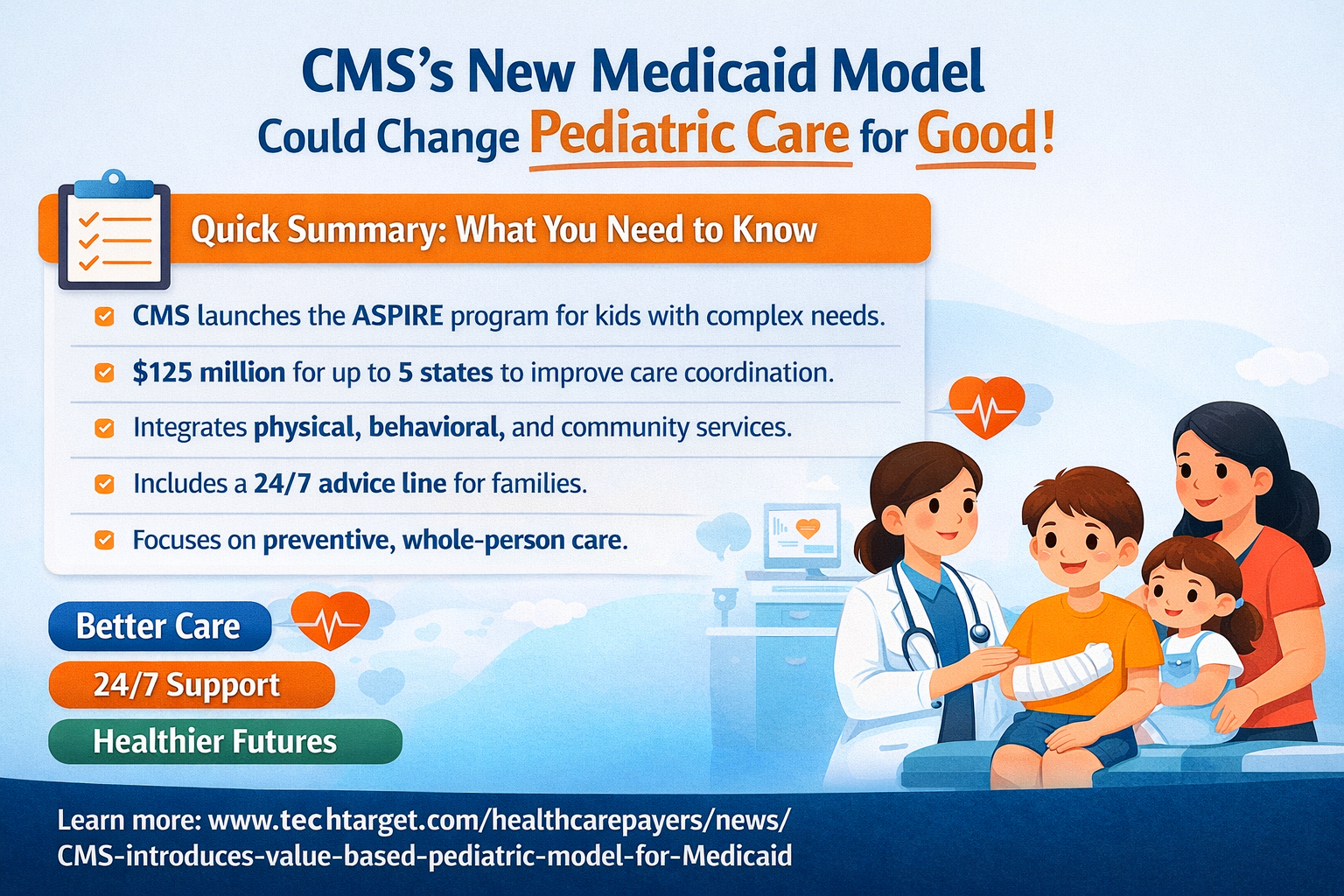
- CMS has launched the ASPIRE Model, a new pediatric Medicaid program focused on children and young adults with complex health needs.
- The initiative will provide $125 million to up to five state Medicaid agencies.
- Its goal is to improve how states coordinate medical care, behavioral health services, and community-based support.
- The model is aimed at patients up to age 21, including those with complex conditions or those at risk of developing them.
- Families may benefit from a required 24/7 advice line, designed to make care easier to navigate.
CMS Launches ASPIRE to Make Medicaid Work Better for Children with Complex Needs
A new approach to pediatric Medicaid care
The Centers for Medicare & Medicaid Services has introduced a new value-based pediatric Medicaid model called ASPIRE, which stands for Accelerating State Pediatric Innovation Readiness and Effectiveness. The program is designed to help children and young adults with complex medical and behavioral health needs get more connected and coordinated care.
Table of Contents
ToggleCMS says the model will award $125 million to as many as five state Medicaid agencies. These states will use the funding to improve care for young people up to 21 years old, including those already living with serious health challenges and those who may be at risk of developing them.
Why CMS is making this move
For many families, pediatric care can feel fragmented. A child may need support from doctors, behavioral health specialists, schools, social services, and community programs — but those services do not always work together smoothly.
That is exactly the gap CMS is trying to address. Under the ASPIRE Model, states will be able to coordinate physical health services, behavioral healthcare, and community support in a more organized way over eight years. The model also includes incentive payments for care teams to encourage better care coordination, stronger preventive care, and improved quality outcomes.
From reactive care to preventive, whole-person support
One of the biggest problems with traditional Medicaid payment systems is that they often reward treatment after problems become serious, instead of supporting prevention and long-term coordination.
CMS has signaled that ASPIRE is meant to change that. The program is built around a value-based payment model, which focuses more on outcomes and overall quality of care rather than simply paying for individual services. CMS officials described the healthcare problems ASPIRE targets as a broader system issue: too much reaction, not enough prevention, weak coordination, and financial incentives that can work against truly patient-centered care.
How could this make life easier for families?
One of the most practical parts of the ASPIRE Model is the requirement for a 24/7 advice line staffed by medical professionals. These professionals will have access to relevant information about participating children and will help caregivers manage care, understand next steps, and handle related paperwork through a single point of contact.
That may sound like a small feature, but for families dealing with multiple appointments, providers, forms, and treatment plans, it could make a meaningful difference. Instead of constantly repeating the same information to different care teams, families may have a simpler and more supportive experience. This is also how CMS framed the expected benefit: less duplication, better outcomes, and a better quality of life for families.
Who is the ASPIRE Model designed to help?
The program focuses on children and young adults facing a wide range of complex conditions, including:
Behavioral health conditions
Children with mental or behavioral health needs often require care across multiple settings. ASPIRE aims to make that care more coordinated.
Substance use disorders
Young people dealing with substance use issues may need integrated support that combines medical care, behavioral health services, and community resources.
Chronic conditions and disabilities
The model also includes children with chronic conditions and some physical, intellectual, and developmental disabilities, where long-term support and planning are especially important.
A stronger bridge from childhood to adulthood
Another notable part of the ASPIRE Model is its focus on the future. CMS says the model will emphasize wraparound services and long-term planning to support health, productivity, and financial stability as children transition into adulthood. States will be required to use part of their funding to build infrastructure or expand access to these services.
This matters because many children with complex health needs do not just need short-term treatment. They need a system that helps them move into adult life with better support, more stability, and fewer gaps in care.
How does ASPIRE build on earlier Medicaid efforts?
ASPIRE does not start from scratch. CMS already runs the Integrated Care for Kids (InCK) Model, a voluntary program launched in January 2020 for children in Medicaid or CHIP with behavioral or other complex health needs. According to the article, six states currently participate, and that model is set to expire at the end of 2026. CMS says ASPIRE will build on that earlier work by creating a more standardized and robust value-based payment framework for pediatric providers.
What happens next?
According to the article, CMS will begin the application process later in 2026 for this 10-year model, with up to five states eligible to participate.
If it works as intended, ASPIRE could become an important step toward making pediatric Medicaid care more proactive, more connected, and far less stressful for families who need the system most.