FDA Refuses Moderna’s mRNA Flu Vaccine Review — What It Means for Vaccine Innovation
Table of Contents
ToggleQuick Summary: Key Facts You Should Know
-
FDA refused to review Moderna’s mRNA flu vaccine application
-
The rejection was procedural, not safety-related
-
The agency criticized the clinical trial comparison design
-
Moderna says the FDA previously approved the study plan
-
Policy shift reflects growing resistance to mRNA research
-
Billions invested in next-generation flu vaccine technology
-
Europe and Canada are still reviewing the vaccine
-
Decision may slow vaccine innovation in the US
Why the FDA Rejected Moderna’s Flu Vaccine Application
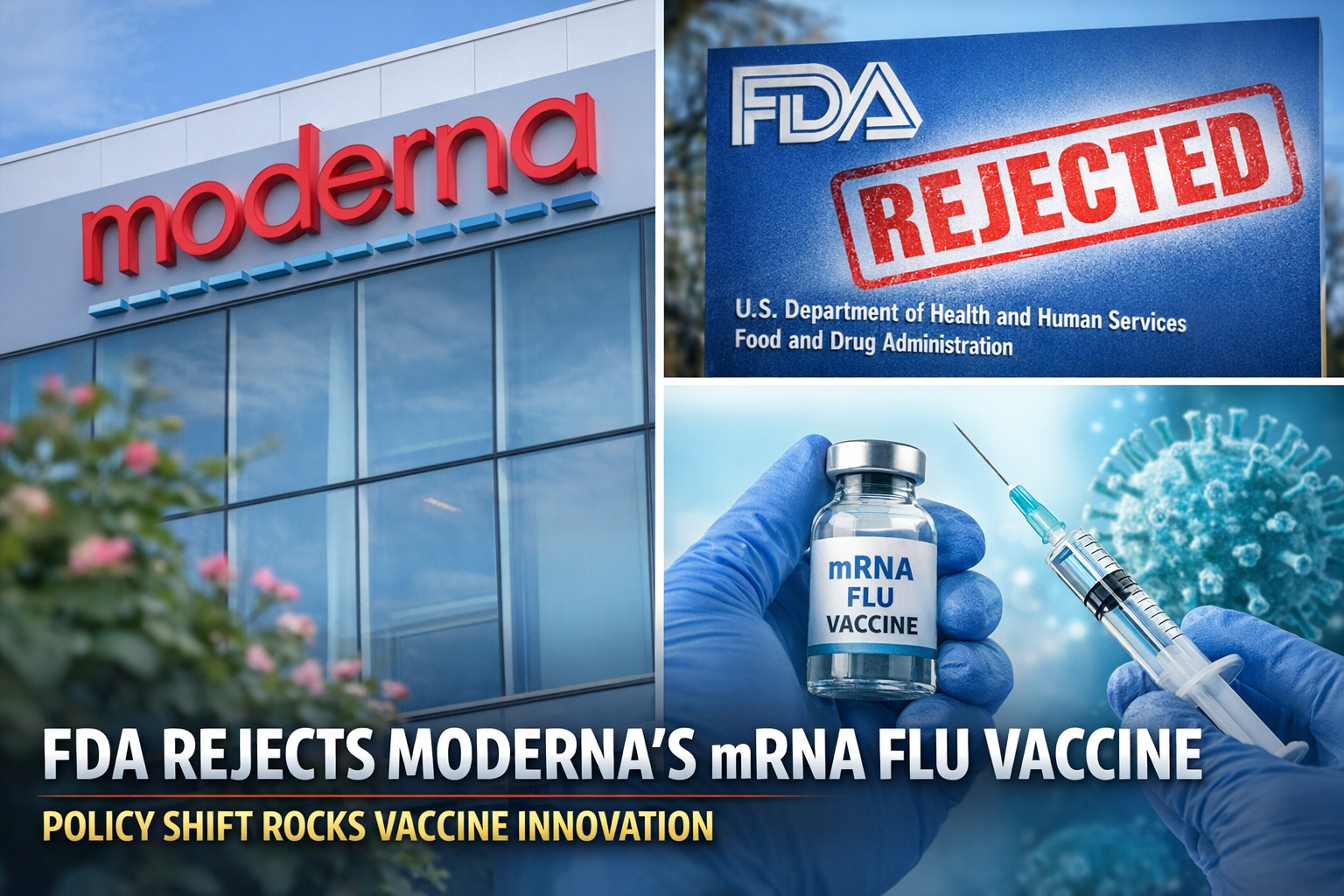
The US Food and Drug Administration has taken an unusual step: it refused to begin reviewing Moderna’s new mRNA-based seasonal flu vaccine.
This wasn’t a denial after scientific evaluation.
It was a refusal to file the application altogether.
According to the agency, Moderna’s clinical trial didn’t meet what regulators now consider the “best available standard of care.” The company compared its vaccine to Fluarix, an approved flu shot from GSK. Regulators argued that a stronger comparator should have been used.
Moderna disputes this reasoning and says the FDA had previously indicated the trial design was acceptable.
That contradiction is what makes this case significant.
What Makes Moderna’s mRNA Flu Vaccine Different
Traditional flu vaccines are produced using egg-based or cell-based technology and must be selected months before flu season begins.
mRNA vaccines work differently.
They can be designed and manufactured much faster, allowing scientists to better match circulating virus strains.
Moderna’s vaccine aimed to:
-
improve protection in adults over 50
-
generate a stronger immune response
-
adapt to regional flu patterns
-
enable future combination vaccines (flu + Covid)
-
reduce manufacturing delays
A 40,000+ participant phase 3 trial reported approximately 27% higher efficacy compared to the standard flu shot.
Importantly, the FDA letter did not raise safety concerns.
The Political and Regulatory Context Behind the Decision
This move comes amid a broader shift in US health policy toward mRNA technology.
Health Secretary Robert F. Kennedy Jr. has publicly criticized mRNA vaccines and canceled hundreds of millions in related research funding.
Several vaccine projects using the technology have been halted.
Meanwhile, global scientific consensus still recognizes mRNA as a breakthrough platform that helped control the Covid-19 pandemic and earned Nobel recognition.
The tension between scientific advancement and political direction is now influencing regulatory outcomes.
Why This Decision Matters for the Future of Vaccine Development
Drug development depends heavily on regulatory predictability.
Companies invest years and billions of dollars based on agency guidance. Sudden changes in interpretation create uncertainty across the biotech industry.
Investors and pharmaceutical leaders warn that inconsistent standards could slow innovation and discourage future vaccine research.
This case signals a possible turning point in how the US approaches next-generation medical technologies.
Global Review Continues Outside the United States
While the FDA pauses, Moderna’s vaccine is still under active review in:
-
Europe
-
Canada
-
Australia
The company expects international approval to arrive before any US decision.
That could mean a vaccine developed in America reaches global markets first — an unusual reversal in pharmaceutical leadership.
What Happens Next for Moderna
Moderna has requested clarification meetings with the FDA.
The company says it remains committed to the vaccine but is reassessing timelines.
At the same time:
-
Pfizer continues developing competing mRNA flu vaccines
-
combination flu + Covid vaccines remain in trials
-
Cancer vaccines using mRNA technology continue to progress
The broader mRNA platform is far from abandoned.
But its regulatory future in the US is now uncertain.
Why This Story Goes Beyond One Vaccine
This is not just about a flu shot.
It reflects a larger debate about:
-
scientific innovation
-
public trust in vaccines
-
regulatory standards
-
Political influence on health policy
-
America’s role in biotech leadership
The outcome could shape how quickly new therapies reach patients in the future.
Stable regulatory environments encourage innovation.
Volatile ones slow it.
That tension is now at the center of vaccine development.
FAQs: Moderna Flu Vaccine and FDA Decision
Why did the FDA refuse to review Moderna’s flu vaccine?
The agency said the clinical trial comparison did not meet the best available standard of care. It did not cite safety concerns.
Is Moderna’s vaccine unsafe?
No safety issues were mentioned in the refusal letter.
What is mRNA vaccine technology?
mRNA vaccines teach the body to produce a harmless viral fragment, triggering an immune response without infection.
Is the vaccine approved anywhere?
Not yet, but it is under review in Europe, Canada, and Australia.
Will this stop mRNA research?
No. Cancer and infectious disease research using mRNA continues globally.
Resources:
https://edition.cnn.com/2026/02/10/health/fda-moderna-mrna-flu-vaccine
http://nytimes.com/2026/02/10/health/fda-moderna-mrna-flu-vaccine.html